

…and he measured six measures of barley, and laid it on her; and he went into the city.
And when she came to her mother-in-law, she said: ‘Who are you, my daughter?’ And she told her all that the man had done to her. And she said: ‘These six of barley gave he me; for he said to me: Go not empty unto your mother-in-law.’
Then said she: ‘Sit still, my daughter, until thou know how the matter will fall; for the man will not rest, until he have finished the thing this day.’ (3:15-18)
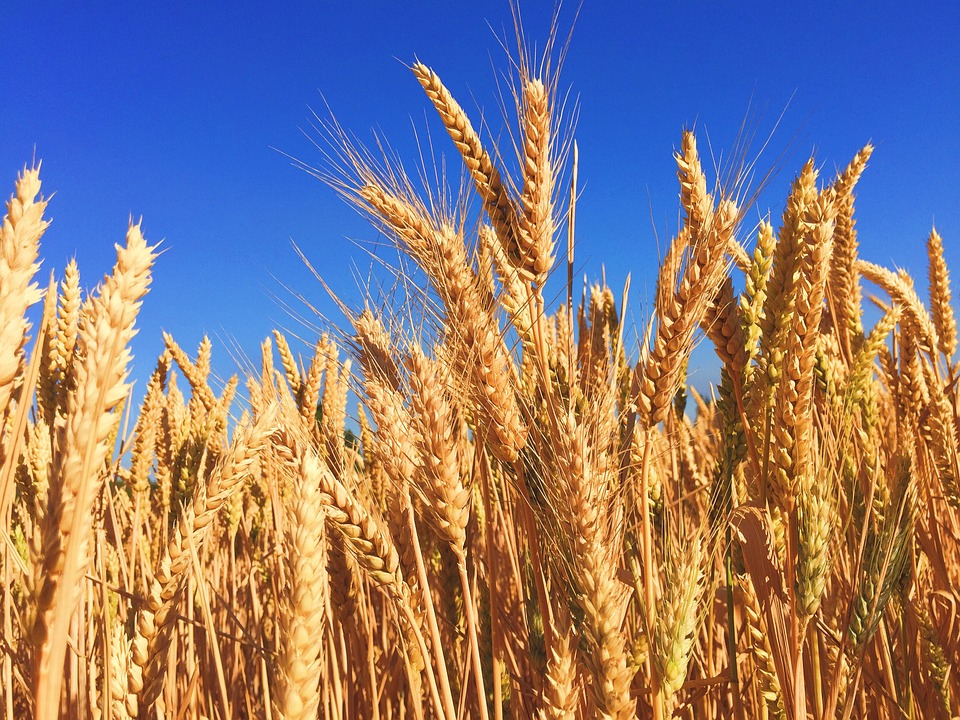
The six barleys are mystifying and it is tempting to see them as symbols. “If you say actually six grains of barley, is it the way of Boaz to give just six grains? Perhaps it is six seah of barley? Is it possible for a woman to carry six seah of barley? It must be that (it is a symbolic act), hinting that she will produce six sons who are blessed with six blessings and they are: David, the Messiah, Daniel, Chananiah, Mishael and Azariah (Sanhedrin 93a).
On a simpler level of interpretation, it may refer to some smaller and unspecified measure of grain; in fact the words barley’- s’orim’ can also be vocalized as measures – shearim’, a usage known to us from Genesis 26:12 ( this interpretation is marred by its inconsistency with the Masoretic vocalization). Alternatively it may actually refer to six seah which Boaz carried almost all of the way until he came to the city and only then transferred them to Ruth. An early morning riser who sees them would assume that Ruth went extra early to the granary to bring her accumulated gleanings home and that Boaz met her by chance and was simply assisting her with her load.
A novel interpretation arises from the verse that follows. We begin by noting that Naomi’s question to Ruth is hard to understand. Did she not recognize Ruth and if she did not, why does she call her “my daughter”? Ruth Rabbah 7:4 suggests: “She said to her, Are you still single or are you now a married woman? She said to Naomi: “I am single”. A fascinating interpretation that is rich with psychological insight is suggested by Nachalas Yosef. Naomi asked Ruth, “Do you still belong to me? Are you still mine or has Boaz taken you away from me? Whose are you now, my daughter, mine or his?”
Boaz foresaw and acted to forestall this reaction. He was wise and realized that he is coming to an already formed, deep and complex relationship. Extreme caution and sensitivity behooves those who enter already established relationships for every addition also detracts and no end of trouble awaits those who insert themselves blindly into such situations. This is something that Boaz understood and he promptly acted to forestall antagonism and jealousy. He did not assume that Naomi was above feelings of resentment and abandonment; instead, he signaled to Naomi that she will retain an important part in the life that he and Ruth will soon share. “‘These six of barley gave he to me; for he said to me: Go not empty unto your mother-in-law.’ The six barleys were a message to Naomi, a message that committed Boaz to restore what she has lost and may be losing again. At the peak of Naomi’s success her family consisted of herself, Elimelech, Machlon, Kilyon, Opra and Ruth – six individuals. Boaz reassured Naomi that when he redeems Ruth he will not leave Naomi behind. Soon Naomi will be restored to the family she has known previously. Thus reassured, Naomi gave consent. Then said she: ‘Sit still, my daughter, until thou know how the matter will fall; for the man will not rest, until he have finished the thing this day.’
There is one more thought that deserves expression.
When the Jews first saw the Manna, a man said to his brother, “Man Hu”. In Hebrew it means – “it is a prepared portion”; however in the cognate language Arameic it is a question that means, “Who is he?”. The Hassidic Master, Chozeh of Lublin explained it in the following fashion. Those that ate manna reached new and elevated levels every day, so much so that every day a man no longer recognized his fellow and asked, “Who is he?” (Sippurei Chassidim, Beshalach). In a similar vein, after David slew Goliath Saul did not recognize him even though the two have met but a few chapters previously.
When Ruth walked through the portals of Naomi’s dwelling, she was taller, straighter, more radiant and infused with illumination of the events of that blessed night. Naomi did not recognize this stranger who so resembled and yet appeared so different from her sister-in-law and she asked in wonder and confusion: “Who are you, my daughter?”
Text Copyright © 2006 by Rabbi Dr. Meir Levin and Torah.org.