

Making the Numbers Count1
How much is a human life worth? Even though the parshah of arachim offers quite a few numbers, don’t look there for the answer.
The work erech tells us that we are not dealing with value in the ordinary sense. When the Torah speaks elsewhere of monetary value, it uses the word kesef, not erech – even when dealing with human beings[2]. Erech must mean something else.
The pasuk speaks of the erech “of persons to Hashem.” Given the context of this parshah at the conclusion of Vayikra, we can safely assume that the “value” to Hashem means the significance of the person to the Mikdosh and the ideals it represents. The value we speak of is an idealized one, invariant from person to person, and derived from the contribution that an entire group of people can be expected to make. The erech value does not treat the individual in front of us as a unique being, different from all others. The Mikdosh, at once the symbol and repository of the ideals of the Jewish nation, sees the person at various stages of life as emblematic of what he or she can produce for the Torah community.
A bit of arithmetic is in order. The erech of the adult male is 50; the adult female, 30. Each of those numbers is exactly ten times the erech of infancy. The basic numbers with which to compute arachim, therefore, are 3, 5 and ten.
We can take three as the number that represents the family unit: father, mother, child. It is the magic number for women, underscoring the focus of their spiritual lives in advancing the nuclear family. Men add two to that number. Without forgetting their similar obligation to the family, they are expected to contribute to a second cause as well – the general community, symbolized by the number two, the number that represents plurality.
In infancy, the base numbers of each gender define the future goals of the person. By the end of the fifth year of life, the child is ready to begin serious training and schooling. This period of chinuch continues till the end of the twentieth year. The focus of this training is to take the potential, and actualize it. More accurately, chinuch aims at not only actualizing, but perfecting the individual. The number usually associated with perfection and completion is ten, the culmination, as it were, of the integers. Thus, the young woman is associated with the number ten, representing the perfection of her singular goal. The young man looks at two goals in his future: his personal one, relating to establishing his family, and the role he will play in building up the community. His “ten” is therefore multiplied by two.
Between twenty and sixty, the adult implements his training, putting it to (hopefully) maximum good use. Therefore, his erech is the multiple of the base number and ten, the number for completion. This gives us thirty for women, and fifty for men. Beyond sixty, the person can look to the harvest years, reaping what he or she has sown. The mature woman can score a perfect ten for her endeavors in establishing her family. The mature male does not fare quite as well. While he can plausibly look back at full satisfaction of his obligation towards his family, earning him ten, he cannot do so well in his contribution towards society. In retrospect, he can award himself five points for partnering with others, for having joined in with his colleagues and associates in leaving some mark on society. His goal of leaving an imprint upon the community will remain, in the majority of cases, half done. For him, then, the final number is fifteen.
The numbers add up. They may seem to us at first to be random or confused, but in fact they map out the journey of a person through life, and the important signposts along the way.
All’s Well That Ends’s Holy3
The idea seems so attractive. Other religions, in fact, borrowed the idea from us without alteration. We show our appreciation to G-d for what he has given us, by tithing. The ten percent that we call ma’aser is His portion in what He has given us.
All this is plausible – but not true. It is not what ma’aser is about. We might have thought that way, if only we could ignore Hebrew grammar. The proper term for a tenth is עשירית, not מעשר. Ma’aser is an active term, not a passive one. It connotes that which turns something into a unit of ten. Ma’aser does not indicate that a portion belongs to Him Who gave us increase. It does indicate the completion of a set.
Completion of a set? Why? At the beginning of a growing season, we acknowledge Hashem’s Hand in allowing us to benefit from His bounty. We offer the בכור, the firstborn of animals, as well as בכורים, the first fruits. Having appropriately thanked G-d, it is easy to regard what remains as legitimately ours. We could be tempted to see all that is produced afterwards as the natural consequence of what He began for us.
Ma’aser won’t let us. It closes the parentheses opened by בכור and בכורים. The number ten stands for completion, for the end of a process. Ma’aser, that which brings us to the number ten, makes us acknowledge that every step in the accumulation of wealth also comes from Hashem. What bechor is to the beginning, ma’aser is to the end. We understand that Hashem does not simply jump-start a process, or set things in motion that continue on their own. Every last bit that we enjoy – and everything that precedes it – is a direct gift of Divine Providence.
The halachic details of these mitzvos bear out this understanding of the mitzvah. The most obvious one is in the procedure for selecting מעשר בהמה. One cannot simply establish the population of his flock, and then designate animals equal to a tenth of the total number. Instead, one has to count the new animals born to him, and the animal counted as number ten – the animal that completes the set – becomes the end point, reflecting back on all that preceded it. Without the counting, there is no set, and there is no ma’aser. (In the case of produce, the “tenth” is equipotential in all the grain. Nothing need be counted in order to designate a tenth item. The quality of being tenth is distributed through all portions of the grain, as if simply waiting to be removed. Thus, the idea of טבל applies to grain but not to animals, indicating the presence of מעשר embedded in a greater quantity, rendering it all prohibited until it is separated out.)
We can now readily understand why Vayikra ends by grabbing on to two mitzvos that do not flow from the previous text. They seem to slip in just as the door is closing, as if something had been forgotten. We have learned throughout this Chumash about creating a home for the Shechinah, as it were. We learned about the various korbanos; we studied the special aspects of kedushah required of those who ministered in His mikdosh. We met up with the demands of kedushah imposed upon ordinary people when they house the Shechinah in their midst.
Now, at the very conclusion, we learn what it is all about. These two kinds of ma’aser elevate the enjoyment of ordinary life to an encounter with G-d. In them, every home becomes a Temple, every table an altar from which each Jew eats, as if he were a priest in G-d’s special place. The goal of holiness, of specialness, ironically becomes the penetration of that specialness to all people and all things.
Zechariah[4] spoke of a day in which there will no longer be any “traders in the house of G-d.” Religion, to many of us, is a business, a form of barter. We build edifices, and spend a bit of time in them. We “trade” this contribution for the rest of our time, satisfying what should be a quest for constant holiness by a few moments of specialness in a special place.
This will change when we reach our national goal in the Messianic future. We will cease being traders. Instead, whatever temples we build then will broadcast holiness to all parts of our life experience.
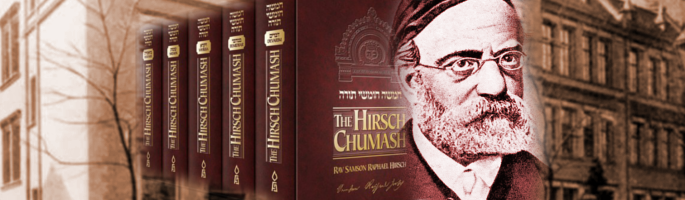
1.Based on the Hirsch Chumash, Vayikra 27:2,8
2.See Shemos 21:32
3.Based on the Hirsch Chumash, Vayikra 27:33
4.Zechariah 14:21