

Now Avraham was old, well on in years, and Hashem had blessed Avraham with everything.
What do you give to the man who has everything? More interestingly, what can you give him so that a man can be said to have everything? The Gemara offers three opinions.[2] A daughter, says R. Yehudah. R. Meir demurs. Quite to the contrary. The best way to upgrade him to everything status is to make sure that he won’t have a daughter! Some unnamed others object to both approaches, and offer a third. What Avraham got was a daughter named Everything.
The “everything” that so many of us pursue is a protean figure, particularly in relation to our three Patriarchs. Each of them owned a different stake in it, leading to the familiar phrase from bentching בכל מכל כל, taken from the different ways each expressed his satisfaction in having so much. Each used a different variation of the word כל, everything, to describe the fullness of his life.
To the casual observer, Avraham could make the best case for having had everything. Indeed, nothing lacked in his life, including fame and prosperity. Most importantly, however, he found personal blessing in his everything, which is not always the case. Too many people are privileged to an abundance of things, but never know the happiness that could flow from them. Avraham, though, found joy in what Hashem gave him. He found it to be a true blessing, and took real satisfaction in it. Therefore, the phrase he employed was bakol, or “in everything.”
Yitzchok did not live as charmed an existence. He had to deal with numerous obstacles thrown up at him. Not every day was full of joy. Yet, he found joy in those challenges themselves, because he sensed just how he was expected to act, and he found happiness in his ability to respond to duty. He was able to draw something positive from everything – מכל – and turn a bad situation into a source of pride and joy.
Of the three avos, Yaakov, beset by problems and grief, led the least attractive life. Yet he achieved the highest form of blessing of them all. He had כל, everything. He didn’t find his happiness in everything, or from everything. He simply lacked nothing. He was interested in doing, not in having. He could thus find satisfaction in every day of his life, regardless of how it looked to others. He had everything, without qualification or modifier.
We return to the three opinions regarding Avraham’s “everything.” R. Meir contends that he was blessed by having a daughter withheld from him. This statement, seemingly disparaging the contribution of women, is more than ironic, set in the section of Bereishis that extols the virtues of Soro and Rivka! Additionally, according to Chazal no marriage has accomplished its goal without producing both a son and a daughter. How could failure to have a daughter be a source of blessing?
The longest narrative of our parshah yields the explanation. Finding a proper mate for Yitzchok weighs heavily upon Avraham. He realizes that he, Avraham, cannot provide Yitzchok with what he needs; nothing but extraordinary Divine intervention could bring his quest to a successful end.
Imagine how much more vexing it would have been to have raised a daughter, only to find it impossible for her to set up a household true to the principles with which she grew up. Avraham could hope to find some special woman for his Yitzchok – someone who would respond to his qualities and message, someone in whom the spirit of his household would resonate. What could he hope for in a partner for a cherished daughter? She would leave his house to take up residence with some Canaanite, living within an alien society. Whatever training Avraham would have given her would be lost, certain to be eroded in the course of time. Thoughts of this fate would constantly disturb his peace. Better not to have a daughter than to be beset with such worries!
R. Yehudah argues that precisely with a daughter would Avraham find happiness. Hashem provided him with one – a young woman so compelling that she indeed won over a foreign spouse to her faith and way of life. She became a bridge, a link to the outside world, a pathway through which to spread Avraham’s ideals even further than they had otherwise travelled. What could be more important to Avraham than radiating his mission to the rest of the world? It was with such a daughter that Avraham found true blessing.
The third view holds that Avraham’s great blessing was that he had no need of a physical daughter to create links to the world beyond. His very success, his blessing in every and all ways, attracted the attention of others. It won respect for him and his message, and functioned as a bridge-builder more successfully than a daughter could have. His “everything” thus became a substitute for a human daughter!
R. Eliezer Ha-Moda’i and R Shimon ben Yocha’i further refine this idea. One said that Avraham’s knowledge of astrology attracted all the kings of East and West to consult with him daily. The other opined that Avraham possessed a precious stone that would cure those who merely looked upon it.
These sages lay bare an unfortunate truism concerning the way men of the spirit are seen by the masses. Avraham’s riches did not really add to his happiness. He would have been just as content with less. Had he not been wealthy, however, he could not have had the impact upon others. They would not have taken him very seriously; the riches within him would have remained unnoticed. His material blessing was a necessary tool to help spread his message.
His wealth and success, however, could not alone create influence. People would want to know the reason for his success. Had people believed that he achieved his wealth through his high moral standing, they would have admired him – but only from a distance. People do not run to learn how to become moral. They are not attracted by the power that can reside within a person’s character, a power that, while so easily comprehensible, seems humdrum and boring.
Instead, they run towards esoteric knowledge, to the secret powers of magic and the occult! To be able to transcend the limitations of the ordinary – to be able to pull the unseen strings that control the areas beyond one’s grasp – this people find tantalizing.
Part of Avraham’s “everything” was that Hashem engineered a reputation and mystique for him that worked. It charmed the masses into taking him seriously, on a level to which they could relate. Believing Avraham to possess special, extraordinary predictive powers, they were drawn towards him. Once they had met him, once baited on their own plane of mediocrity, they were able to respond to his true gifts. Meeting him in the flesh, they found that his knowledge was that of the philosopher, not of the astrologer. Once there (according to the other opinion), they learned that his magic stone was none other than a personality so giving and benevolent that people were healed by spending time in his presence.
The upshot is identical. Avraham’s “everything” included the tools he had no particular interest in himself, but that Hashem judiciously provided him to make him more successful in acting as His ambassador to the world.
Does The Torah Teach About the World to Come?3
And Avraham expired and died at a good old age, mature and content, and was gathered to his people.
Too often in history, when people hostile to Judaism were confronted with Jewish contributions to mankind, they jumped through hoops to deny them. Adherents of other religions had a hard time with the Bible, given its obviously Jewish character. One of the techniques they resorted to was claiming that the Old Testament of the Jews was deficient, and required a later addition to offer the world what it needed most.
One such claim dealt with the immortality of the soul. Nowhere, they triumphantly proclaimed, had they found an explicit text in which the Jewish Bible taught the doctrine of life after death. The world had to wait for a subsequent teaching.
They are on to something. The Torah indeed does not make a point of teaching any such thing. It had no need to. People who could speak of a deceased being “gathered to his people” before his very burial had no need to be instructed in immortality. They took it for granted! To them it was patently obvious that the “real” person, his soul, took leave of the body and returned to his source. There, he joined his people, those who had made the journey into earthly life and beyond before he had. Only after this does the Torah speak of the burial, in which the remains of the earthly phase of a person’s life are respectfully interred in a manner that is fitting its role in assisting the soul during its few decades here. The Jewish people did not have to be taught something with which they were well familiar!
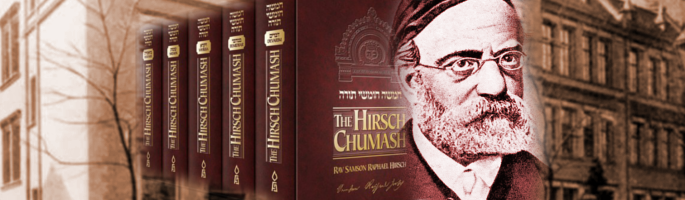
[1] Based on Hirsch Chumash, Bereishis 24:1
[2] Bava Basra 16B
[3] Based on Hirsch Chumash, Bereishis 25:8