

Membership Has Its Price1
It is not what it appears to be. The elaborate and unusual steps that the metzora must take as his symptoms disappear do not mean a return to ordinary life. That will take some time, and only happen after further special treatment, followed by special offerings. Only then will he be allowed access to the Beis ha-Mikdosh. The treatment prescribed by the Torah at the beginning of the parshah addresses one aspect of his condition: his membership and participation in a social community.
Lashon hora is an insidious destroyer. To be sure, it wreaks havoc with the character of the person accustomed to speak it. The person to whom the malicious barbs are directed can be hurt – or even worse – by it. It would be a mistake, however, to see it as an interpersonal crime perpetrated by the speaker upon the target of his words. In truth, lashon hora is not a problem between two people, or a small group of people. Where there is lashon hora, the integrity of the community as a whole suffers. Its strength, the bonds that hold people together, is undermined. The pillar of communal cohesion begins to decay, as if plagued by internal rot.
The metzora, punished for his lashon hora, must be taught about the injury he caused society. He is banished from that society, driven out of the Camp, and expelled from the company of Man.
When he begins to recover, he can start his reeducation.
The two birds are featured front and center in the opening psukim. These are not household pet birds, but quite the opposite. They are wild, and so untamed that “they dwell in the house the same as the field.” Houses, civilization, mean nothing to them. They know of nothing but utter wildness and freedom. If the house is the symbol of the triumph of civilization over Nature, these birds repudiate the restrictions of that civilization. They are inherently unsociable.
The two birds remind us of the two goats of Yom Kippur. Like those animals, these birds should be similar[2] to each other. Like the goats, one is slaughtered, and the other one is sent away from the central place of habitation.
There, the resemblance ends. The goat that is not slaughtered is sent to the Azazel wilderness, a place that is inhospitable to most life. The metzora’s live bird may not be sent there, but is directed to the open fields that surround a city. Those fields support a rich variety of life, at least the plant and animal kind. In a word, the bird is sent from the strictly human realm, to the place of the animals.
The bird’s colleague doesn’t fare as well; it meets up with the slaughterer’s knife. Unbridled free expression and license simply is incompatible with human society. The desire for living with no restraints whatsoever has no place in the company of Man. The first step that the societal misfit takes is to give up the notion of a life as free as the beasts of the field. That notion must be sacrificed without qualification[3].
Sacrificing it does not mean negating the existence or importance of his more animalistic nature. If the tendencies are part of the human condition, then they can be put to good use and should not be contemptuously scorned. The one bird is slaughtered – but not simply for the purpose of ending its life. The Torah specifies that it be slaughtered in an earthen vessel filled with water from a “live,” ever-flowing spring. That spring represents the continuity of Man’s life – his immortality. During his lifetime, that immortal soul is housed in an earthy container, in which it is expected to elevate itself and the world around. It is true that the dissolute, wild part of Man must be slaughtered, meaning brought under the full control of Man’s moral sense. When it does, its energy too plays a role in Man’s mission. It must be channeled rather than discarded.
The other bird teaches about that channeling. The live bird – the animal side of ourselves that must continue to thrive – is brought together with the cedar wood, wool thread dyed red with worm-blood, and hyssop. The cedar is a very large tree; hyssop a small plant. The sheep is a large animal relative to the lowly worm. Taken together, they represent the end points of the plant and animal kingdoms, large and small. The live bird of the metzora belongs, initially, to their world. Having slaughtered the idea of living an unrestricted, unfettered life (through the shechitah of the other bird), he needs to raise up his surviving animal side to a higher plane. The kohen dips the bird together with the other symbols in the blood of the slaughtered bird, and sprinkles the healed metzora seven times, before sending the live bird off towards the open field.
Here the metzora learns about the road ahead of him. He has already rejected absolute license. Now, he comes to understand that parts of his inner self belong to a different realm. They are not evil, but are shared with the greater natural world of plants and animals. That world surrounds the city of civilized Man – but it does not enter into it. Taming the animal self does not happen in a flash of recognition. A seven-fold gap stretches between the field and the organized community of Man. That gap is symbolized by the seven sprinklings on his hand, according to one opinion, or his forehead according to another. (The two options represent the two most “human” parts of our anatomy, symbolizing action and thought, respectively.)
Making this seven-stepped transition demands a break with the past. Old habits have to move out before new ones can move in. The metzora is shorn of all of his hair, from head to toe. Skin is a sensitive organ, our interface with the influences of the external world. Hair acts as an insulator against those influences, a barrier and buffer against a barrage of stimulation to the skin. It helps isolate the individual. The metzora on the way back to society must give up that isolation, must make himself more sensitive to the needs of others, rather than continue to be self-absorbed. Shorn of all protection from outside stimuli and information, he may learn to become more sympathetic, more concerned, and less ego-centric. (The initiation of the Levi’im into their position also requires shaving the entire body[4]. They too must give up part of their protective armor and give of themselves more freely for the good of the many. Interestingly, the Levi shaves himself. He willingly gives up the fully justified life he led previously in order to assume his new role. By contrast, the metzora is shaved by a Kohen. The selfish, self-centered life he led in which he cared insufficiently for the well-being of others must be contrasted to the Mikdosh and its values, with the Kohen acting as its agent.)
The former metzora is then readmitted to the company of men, but not as a full participant. Barred from entering the Mikdosh, he must ponder the lessons he has learned for another seven days before his final, equally important step in rejoining society: participation in the pursuit of the national mission of kedushah of the Jewish people. (That will come after another round of shaving, and the offerings of the eighth day.) Ironically, during the time of his active tzora’as, while he was banished from the community he was allowed the fullness of his relationship with his wife. In this week of reentry, awaiting his readmittance to the precincts of the Mikdosh which represents the highest aspirations of the Jewish nation, he must dwell “outside of his tent” – apart from his spouse.
A powerful thought explodes from this halachah, just as the former metzora readies himself to enjoy community life in its most perfect sense: Only those who fully recognize the rights of others to their lives and homes are fully granted the right to enjoy their own.
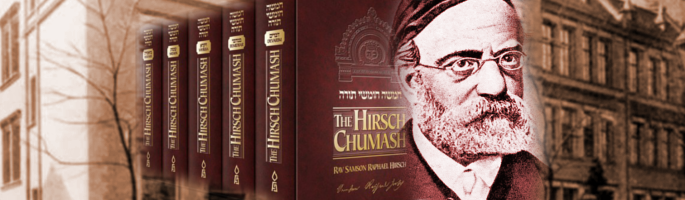
1. Based on the Hirsch Chumash, Vayikra 14:1-9 2. Nega’im 14:5. This is a halachic preference, but not critical. 3. The ceremony surrounding the remaining bird will fill in some of the why’s and wherefore’s, but slaughtering one bird comes first – suggesting that he must almost intuitively understand that Man cannot live by his primitive instincts alone. 4. Bamidbar 8:7