

The Source of All Freedom1
Moshe said to G-d: “Behold, when I come to the Bnei Yisrael…and they will say to me, â??What is His Name?’ what shall I say to them.” G-d said to Moshe: “I shall be as I shall be.”
What’s in a name? When it comes to HKBH – everything! We do not learn about Hashem with our eyes, but with our ears. After our minds finish churning the aural information passed on to them, we arrive at some sort of human understanding of Who He is. Streamlining the concept, reducing it to an economy of words, we are left with a Name. (Shem, or “name,” is related to sham, or “there,” the word that indicates a place. What place is to physical objects, name is to conceptual ones. A name is the “place” in our minds occupied by a concept.)
When Moshe asked for a Name, he was aware of the dual nature of his mission. On the one hand, he had to convince a mocking Paroh to free the Jews. On the other, he had to prepare the nascent Jewish people for their freedom and their destiny. He had to make them worthy of redemption, and worthy of the Torah they would receive. The second task was the more difficult one. He asked HKBH for assistance: What is the revelatory, breakthrough understanding about You that I can give to the people? What insight can I bring them that will lead to a sea-change in the way they relate to You, and that will inspire them to begin moving in the direction I know they must travel?
Hashem answered with, “I shall be what I shall be.” Significantly, he does not say “I am” in the present tense, but “I shall be” in the future. He stresses that the future is not already predicted by what is. For G-d, freedom is absolute. There are no preconditions or limitations. The future for Him is purely a function of His Will.
For too many people, the relationship between G-d, Man, and the universe is frozen in one instant of time. Seen their way, at the moment of creation, G-d set into motion inexorable laws of Nature, which are always present, and never altered[2]. G-d does not transcend these laws, so much as He is revealed in them. There is no future, save what has been inscribed in the past. Man might imagine himself to be free, but the belief is delusional. With G-d Himself constrained by the limitations of Nature, how could Man’s freedom be anything but illusory, the product of misleading, unconscious influences of his past?
One simple phrase shatters and obliterates this notion. “I shall be what I shall be.” The future remains breathtakingly unwritten. All things are possible to Him. Within the absolute freedom that belongs to Him, the future of Man becomes quite a different thing. Sourced within Him is the possibility of freedom of the will for Man as well. Because such freedom is a reality in Him, not an illusion, it is possible for Man as well to share and experience it if He so wills.
G-d hinted at this once before, in a coda to the symphony of Creation: “which G-d created to do.”[3] His creation was not finished. Whatever He called into existence would keep on working, particularly in regard to the last step and pinnacle of Creation – the creation of Man. Man would become the steward of this world, the guide to all that would come.
There words mark the transition between Hashem’s creative role in Nature, and the new creative role in the history of Man. A midrash[4] pithily describes the new role. “He rested from the work of creating His world, but He did not rest from the work on the tzadikim and resha’im. Rather, He would work with these and with those. To each He would show the future that is in store for them.” The work of Hashem, so to speak, is thus not fixed at the beginning of time. To the contrary, Creation only serves as the backdrop. The dynamic relationship between G-d and the world continues as He responds to the free-willed choices that He left for the realm of Man.
The transition is also marked by a shift in the Name of G-d. Till now, the Torah uses only the Name Elokim – signifying fixed, causal Nature. From here on, the four-letter Name – telescoping within it past, present and the all-important future – is put to use as well. Similarly, on the threshold of the geulah, approaching the first intervention in the flow of the history of Mankind on the mass level, the Torah once again introduces a new Name: “I shall be.” It is a clarion call to Man to use his free-will responsibly in shaping the future – to make His Will our will.
Hashem’s Speakers Bureau5
He shall speak for you to the people. He will be your mouth, and you will be the leader.
This does not describe an arrangement of convenience, but a separation of roles that would endure. Two very different gifts would be required to communicate the Divine word: the message, and the medium.
Moshe represented absolute clarity and accuracy in comprehending the Divine message. Yet he found himself suddenly stymied when faced with the task of relating its content to the skeptics. To succeed, he knew that the message had to be delivered through eloquence and oratory – and he found himself wanting.
The role was thus split into two, with Aharon assuming the oratory role. This separation manifested itself in the days of Chazal in the institution of the meturgamon. He was the popularizer, the one who would take the precision of the chacham in comprehending the law, and convey it to the people in a manner that the chacham could not. The same relationship exists in the tension between the שמעתתא – the content of the law – and the אגדתא – the popular presentation that would appeal to the heart and soul, not just to the mind.
The master of oratory, the one who is painfully conscious of the level of his audience, it s receptivity and its needs, faces an occupational hazard. To make himself heard and accepted, he can unintentionally lose much of the clarity of the very teaching he wishes to convey. He can easily weave in extraneous ideas that not only dull the original teaching, but compromise it, or stand in actual opposition to it. Orators can easily become comfortable with using a great number of words, all of which say very little – or say things that are wrong!
The roles of Moshe and Aharon remind us that the two parts to communication must work together, and cannot be separated. The chacham, the repository of the accurate message, must be appreciated even when he is of slow speech and less than scintillating eloquence. It all begins with the accuracy of the message.
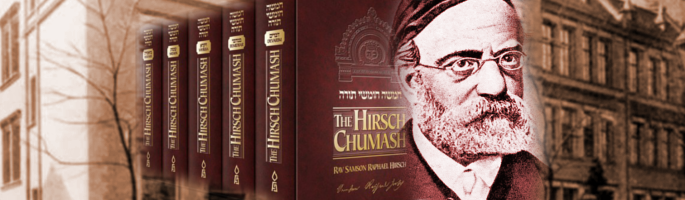
[1] Based on the Hirsch Chumash, Shemos 3:13-14
[2] R Hirsch probably takes aim here at Deists, plentiful in his day in liberal circles. G-d was seen as necessary to account for how the world came into being, but once He created it, it manages nicely without Him. The reins of power are now fully in Man’s hands – although, as R Hirsh shows, any feeling that he has any real choice would be illusory. Man’s “choices,” should be no different according to this view than any other phenomena. They would all be determined by laws of Nature.
[3] Bereishis 2:3
[4] Yalkut Shimoni, Bereishis #16
[5] Based on the Hirsch Chumash Shemos 4:16