

Altars Are Not Green1
You shall not plant an Asherah-tree – nor any tree – next to the altar of Hashem your G-d, which you make for yourself[2].
Who could object to decorating the altar with some of the natural beauty of G-d’s creation? Besides adding some esthetically pleasing accents to the otherwise stark, stony expanse of the main altar, reminding us about Hashem’s role as Master of Nature would seem to do us some good.
Clearly, the Torah feels otherwise – and with good reason. The worship of the G-d of Nature falls so far short of the Jewish mission, that the Torah bans it altogether.
The Asherah did not simply add a bit of green enhancement to a proper understanding of Hashem. The Asherah limited and distorted that understanding. It boxed G-d into Creation, into the physical and palpable world. Pagan gods were inseparable from forces of Nature. Their rule, their kingdoms, their spheres of influence were limited to the display of those forces within the world around, often pitting one god/force against another. Humans paid homage to these gods, hoping to tap into their physical power for some favor or gain. The word Asherah comes from the word asher, to make fulfilled or thrive. You tended to the Asherah planted in honor of a particular god. Your care made the tree flourish and thrive. In recognition of the honor you showed it, its god helped you out with some special assistance, placing some natural force at your disposal.
Such an approach is a primitive pantheism, seeing G-d everywhere in the physical universe, and nowhere else. The moral realm remains untouched by the gods, who have no interest in the inner refinement of puny ungodly Man. The Torah abhors this way of conceiving and serving G-d. The service of Hashem requires us to subjugate our inner lives to Him, to extend His influence to controlling our wants and desires, and the development of our character and personalities. We approach the physical world guided by His instruction, not armed by His power. Only when we introduce His Will to the moral sphere, when we respond to it and change our inner selves, have we accomplished anything of value. With it, we have done everything; without it, we have done nothing. Only one pasuk earlier[3], the Torah laid down the great principle of tzedek, tzedeh tirdof – you will surely and assiduously pursue righteousness. Banning the Ashereh means focusing upon the power that recognizing Him should kindle within us, and not upon the power of G-d in the natural world. It is logical extension of the mitzvah of pursuing righteousness.
Chazal recognized the impulse to find G-d within Nature (an impulse which grows in popularity in the countries in which we live). They understood the danger that this impulse could easily lead people to worship the G-d of Nature rather than the G-d of morality. They went so far as to buttress the prohibition against planting Asherah trees by banning any kind of wooden structure surrounding the altar[4].
The next pasuk further distances ourselves from focusing upon the G-d of Nature. It prohibits using stone monuments to worship Hashem. It tells us that Hashem, as it were, “hates” such monuments.
This is puzzling. Our holy patriarchs made good use of these matzevos. It is difficult enough to understand why Hashem would end a practice that served us well in the first generations of our peoplehood. It is much harder to comprehend why the cherished service of the Fathers becomes detested when practiced by the sons.
Yet, the idea that we have developed explains the shift admirably. In a world populated by pagan Nature-worshippers, the first order of business was to place all of Nature under the rule of a single Deity, bringing all the diversity and disunity under the direction of the One G-d, rather than the resultant of the turf battles between spoiled dysfunctional gods[5].
The stone monument was a perfect place to reject the pagan theology. The matzevah was nothing more than an outcropping of rock, a piece of G-d’s creation that struck a human observer as interesting. It reminded the person of the Power of G-d in creation, and was the appropriate platform upon which to declare that the One G-d was responsible for all of Nature, not a gaggle of them. There was room for the matzevah alongside the altar, the mizbeach. Indeed, the avos used both.
Prior to the creation of a Jewish people, the service of G-d was limited. There was no large group, ready to take G-d consciousness, and live a national life so guided by His Will, that it paid homage to Him. The service of G-d, at least insofar as the message that it conveyed to the world at large, sought to convey the idea that there was a single G-d of Nature, and in the continuing unfolding of Nature in history. This is what the avos did, and why they frequently made use of the matzevah.
This all changed with the birth of the Jewish nation, and with its receiving its charter at Sinai. Now, the first phase had come to an end. G-d could be, and had to be, recognized for His mastery of our inner lives. This would come about chiefly through human activity, through changing our behavior at every juncture of life. Altars are not found in the natural world as are matzevos. They are built by human hands, placing stone on top of stone.
From this point on, any service of G-d that found Him to be the Master of Nature, but did not make Him Master of our inner lives, and hence our behavior, would be unacceptable. Moreover, it would be fully hated. The old matzevah has been replaced by the consciousness of the Oneness of Hashem that was one of the most important contributions Klal Yisrael has made to date to the civilized world. The next great contribution – showing how an entire people can invoke that consciousness to make their thoughts and behavior more G-d-like in a host of different countries, vocations, and circumstances – still remains to be perfectly conveyed. It is part of the importance of the altar.
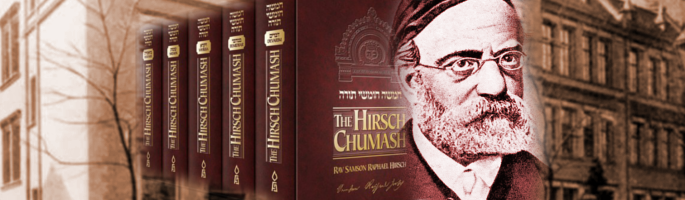
1. Based on the Hirsch Chumash, Devarim 16:21-22
2. Devarim 16:21
3. Devarim 16:20
4. Ramban, Avodah Zarah, 6:10
5. Furthermore, this Unity was something that Avraham discovered, according to Chazal, within Nature. He sensed the Designer from within the design, and understood the unity of a world that was a refraction of the Unity of its Creator.