

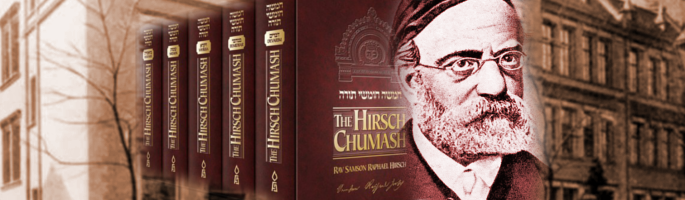
One Size Does Not Fit All1
The boys grew up. Esav became a man who knows hunting, a man of the field, and Yaakov a wholesome man, dwelling in tents.
Different as they were from the womb, Yaakov and Esav were not prisoners of their separate natures. They were not forced by their dispositions into antagonistic roles. Esav’s strengths and talents could have been pressed into productive and positive service, had they been properly nurtured and guided. That did not happen. The very real differences between the brothers did not factor into the way they were educated in their formative years.
Is it proper for us to speculate that Esav’s upbringing by his parents had not been picture-perfect? Is it conceivable that Yitzchok and Rivka missed an opportunity? With all the yiras ha-romemus we have for the Avos, we still will take our cues from Chazal. Despite the enormous appreciation and respect that they had for the Avos, their critical eye was never blind to the occasional errors and flaws of the Forefathers. They even call attention to them when we might have missed them ourselves. In doing so, they did us a great favor. They turned many episodes in the lives of the Avos into important lessons for us. It is only because the Avos, in all their greatness, were not perfect that we are able to learn from them, rather than dismiss their example as irrelevant to us.
In our verse, Chazal point to a decision that may have led to the behaviors that shaped Esav’s life. To be sure, Esav was responsible for his wrongdoing. Yet, had he had other options from which to choose, who knows how differently he might have developed, and how that could have changed human history!
It is not difficult to describe in simple terms what Hashem wants every Jew to achieve in the course of his or her lifetime. How we get there is a different matter. All the multifarious possibilities within the human personality and all the various situations of time and place make each person’s odyssey different from that of the next.
It is a mistake to believe that two children, whose natures markedly varied from each other at an early age, could be given the same kind of training and education. Yet, the pasuk sums up their early years in one, brief description of uniformity: “the boys grew up.” We see them sharing the same classroom, the same curriculum, the same hobbies and schedule. Both were being prepared for a life of intense study and contemplation.
Yaakov found great satisfaction in this. He thirsted for more knowledge and thrived on finding it. His inner needs were met, and his strengths were enhanced by his upbringing.
For Esav, this was poison. He longed for the moment when he could rid himself of the cumbersome books and hours of regimented restriction. In his mind, however, the system of his education became synonymous with the entire lifestyle that produced it. When he became old enough to assert his independence, he would bolt not only from the classroom, but from all the values associated with it.
It did not have to be that way. Judaism does not hope to mass-produce a single product. The covenant Hashem established with Avraham called for the building of a nation, not a large number of people. Within a nation, there is a need and a calling for application to all of life’s needs – not just priests and scholars. The Torah nation would have to include many vocations, and make use of many virtues and talents. Probing, analytic thought and refined feeling would be important in a Torah nation – but so would other characteristics. A community committed to applying Hashem’s truths to myriad human affairs would need citizens with strength and courage, as well as intellectual acumen.
Had Yitzchok and Rivka found ways to recognize young Esav’s energy, agility and courage, and to direct them to activities of positive Torah value, he could have become a different person. The spirit of Yaakov and the sword of Esav could have partnered together, rather than become pitted against each other.
Esav became the hunter. At the core of that vocation is self-control: patiently waiting for the moment to strike against prey. The hunter seems to wait peaceably; his real intent remains hidden within. The hunter uses his cunning to achieve what he wants. Applied selfishly, Esav’s talent set is devoted to trickery. Applied correctly, it was suited for loftier accomplishment, like diplomacy. Instead, Esav suffered years of repression of his needs. He developed an aversion to the restrictions of the indoors, and waited patiently for the opportunity to become the man of the field. To the same extent that he had been kept prisoner inside, he now demanded the absolute freedom of the outdoors, of life away from the expectations of city and state.
While children are best served by different educational experiences, some areas require sameness. Siblings should be treated to the same displays of love and closeness from their parents, as well as agreement between parents on the goals and methods of their development. Some children in a family may seem not as “good” as others; they are the ones who require the love and sacrifice of their parents more than others – at times, more desperately than children who may be ill or have special needs. The Torah tells us, however, that “Yitzchok loved Esav…and Rivka loved Yaakov.” They did not present a common, united and equivalent face to the two brothers. This did not help Esav’s development.
The reactions of the parents are entirely understandable. Each was attracted to their missing part.
After the powerful experience of the Akeidah, Yitzchok rose from the altar to an intensely meditative existence. He shunned the crowd and found himself drawn to the Be’er L’Chai Ro’ee, to the desert spring where he hones the power of his prayer. Esav’s intoxication with the active life reminded him of something within himself that he had lost, and wanted to believe could be put to good use.
Rivka, on the other hand, spent her early years in the house of Besu’el and Lavan. She had never watched someone grow up in purity and innocence, constantly improving in his spiritual output, before being thrilled to observe it happen in her own son.
Each parent, then, was drawn to a different child, and therefore grew apart from the commonality of goal and method that are so important in raising children. Their feelings cannot be criticized – but they should have been better hidden from their children.
Ironically, then, Yaakov and Esav’s upbringing departed from the textbook formula. Where they required difference – in their education – they received sameness. Where they should have seen nothing but equivalence – in the affections displayed by their parents – they experienced difference. We don’t know why this was.[2] We can, however, learn from the episode about how to raise our own children.
[1] Based on the Hirsch Chumash, (Bereishis 25:27)
[2] See Netziv 24:65 who notes a different anomaly in the relationship between Yitzchok and Rivka, and assumes that the Hand of Providence was behind it. It contributed to the strained relationship between Yaakov and Esav, leading to Yaakov receiving the brachah from his father.