

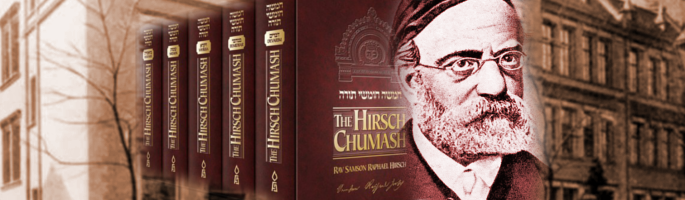
Managing Jewish Pride1
Into their councils my will may never enter; with their gatherings my honor may not be identified…Cursed be their anger, for it is strong, and their wrath for it is harsh. I will separate them within Yaakov, and I will disperse them in Yisrael.
Yaakov’s blessing of his sons amounts to the first major testament to the future Jewish nation. We should expect some surprises.
Ruvain was passed over for leadership because he displayed too little self-confidence and assertiveness. Shimon and Levi, in turn, forfeit the mantle of leadership for showing too much.
Yaakov curses their anger. Yet, at the same time he hits that their anger is not in and of itself a curse but a blessing.
The אף and עברה, the anger and fury that Shimon and Levi possess are dangerous to great people only within the context of concentrated power. Yaakov curses the anger not because it is of no value, but because it is עז, powerful, and קשה, hard, unyielding and obdurate. One ignited, it will not be contained by reason and persuasion. It must be tempered, therefore, by Yaakov’s ארור, by his curse.
The word is related to ערירי, meaning fruitless. The potential of that anger must not meet with success. Were that anger to be available to leaders and rulers of the people, it would take the form of boundless ruthlessness. Convinced of the holy rectitude of their position, and believing that they act for the common good, rather than self-interest, nothing will stop them.
Scattering Shimon and Levi does not cure their anger, because it is not in need of cure, as we shall see. It tempers the major pitfall of such anger, which is pressing it into service on behalf of the nation. Their anger becomes a problem specifically at the junction where it meets with the leadership of the many. Thus, Yaakov underscores that his hesitancy about Shimon and Levi concerns סודם, their conferences and councils. He does not wish his will, meaning the collective will of the Jewish people, to enter those deliberations. Their calls to action should not be influenced by the collective needs of the Jewish people. Their manner of dealing with issues cannot be allowed ever to be a reflection of the conscience of the nation.
In effect, Yaakov’s description here of his expectation of the Jewish people prominently gives voice to an ethic that much of the world continues to resist. For too many people, morality is only meant to impact upon personal behavior. Nations, they believe, must act on different principles – or lack thereof – and cannot be bothered by the niceties of ethical desiderata.[2] Behavior that would be criminal for the individual is seen as laudatory when performed for the nation. Cunning, trickery and force become virtues, rather than vices. Yaakov here forcefully rejects this way of thinking. There are to be no public short cuts on the moral highway. The means need to be just as pure as the ends.
Shimon and Levi need to be separated and scattered – but only within Yisrael. When the Jewish people function as a nation, the power of their combined zeal could overwhelm the rest, and determine policy. Yaakov does not allow that to happen. Levi will receive no region of their own. They will be sustained by the ma’aser of produce grown in the land of others. That ma’aser will not come to them as a direct entitlement. Each non-Levi will be free to give his ma’aser to whichever Levi he chooses. The Levi’im will need to develop patience, calm, and people skills in order to curry favor with potential donors. If they don’t, they will go hungry. They will learn to curb their anger in order to survive.
Shimon’s territory will be surrounded by that of Yehudah, making it dependent of a large and powerful tribe. Shimon’s influence on national affairs will therefore be muted.
With these restraints in place, Shimon and Levi will not reach a critical mass of decision-making power. Their anger will be neutralized.
Neutralized – but not destroyed. When Shimon and Levi are not “in Yisrael,” when the Jewish people are driven into galus, their zeal becomes an asset to a downtrodden people who might otherwise lose all feelings of self-respect and importance. Because Shimon and Levi were “dispersed,” they will be found in all parts of the community, to keep alive the fires of Jewish pride, and to sustain the Jewish spirit. Their zeal survives even when the state is lost, even when Jews are impoverished and mocked. By making it available to all, they sustain the people
Chazal tell us that soferim and teachers came from Shimon, while Levi staffed the batei medrash where Torah would flourish. This is the ultimate expression of their fiery anger and zeal – channeling the prideful will to survive into the most potent tool for that survival: fierce commitment to the study of Torah.
Homogenized Prayer3
Yisrael said to Yosef: To see your face, לא פללתי, I had no longer thought possible.
What בלל is to material, פלל is to the conceptual.
The former means mixing into something. It is about introducing something from outside, and so thoroughly blending it within, that all of it becomes a single mass. The latter does the same in the realm of thoughts and ideas. Thus, פלל also refers to the job of judges. Their task is to take concepts of right and justice, and mix them thoroughly into all the claims and counterclaims, until they achieve a harmonious unity.
פלל is of course also at work in תפלה, in prayer. Here, too, the essence of Jewish prayer is the introduction of ideas from without. It is not, as people suppose, primarily about giving voice to ideas that spring from within. If it were, our fixed times of prayer and prescribed, systematized liturgy would be ludicrous. How could we possibly believe that those who pray at a given, assigned time all spontaneously think the same thoughts and share the same feelings?
Our prayer includes the opposite route – the introduction of external ideas to our internal mechanisms. In the course of time, ideas that we cherish and hold true become abraded. Their sharpness is dulled; sometimes, throught disuse, they cease to be available to us, and are forgotten altogether. When we daven, we reintroduce those truths to ourselves, blending them thoroughly into our inner beings.
[1] Based on the Hirsch Chumash, Bereishis 49:6-7
[2] At least as of a few years ago, the single most read work by recent world leaders with Machiavelli’s The Prince
[3] Based on the Hirsch Chumash, 48:11