

The Shared Happiness of Ordinary Existence1
It was, for a while, the happiest day of his life. After so many years of struggle and trial, Yaakov set out to join the son whom he had never expected to see again. Moreover, the fractures that crisscrossed the face of the family had been repaired; all of Yaakov’s children took part in new-found familial harmony.
Beersheva was the border city at the southern extreme of Israel before entering Egypt. So much of the family’s history was bound up in this place! Yaakov would not miss the opportunity to remember that history, and to ponder the ways in which his forebears had seen the workings of Divine Providence. He would mark that remembrance by offering korbanos to Hashem at this auspicious place.
He reaches for the unexpected. While the other Avos consistently brought olos, Yaakov here brings zevachim, which are usually shelamim. The change is significant. The theme of an olah, which is completely consumed on the altar, is giving oneself entirely to G-d. The imperative to yield oneself to G-d is fairly universal – it arises in the minds of non-Jews as well as Jews. In the Beis HaMikdosh, we therefore accept olos brought by non-Jews.
Shelamim are a different matter, and make a very different statement. Zevachim as a class are eaten by their owners. In effect, one who brings such a korban takes part of it back to his family, thereby bringing the Beis HaMikdosh to his abode. His home becomes a mikdosh, and his table becomes a mizbe’ach. While olah expresses the notion of going to G-d, in the zevachim, Hashem comes to us. In the family united in its devotion to Hashem, He penetrates every nook and cranny of life. He takes up residence in the ordinary and the pedestrian and changes it into something higher. Within the common routine of family life, He becomes perceptible. He is present in the quotidian activities of eating and drinking, which would otherwise be devoid of spiritual content. Within the shrine of a Jewish family, the sons and daughters become the priests.
This notion is uniquely Jewish. Non-Jews cannot offer shelamim in the Beis HaMikdosh. For the first time, Yaakov felt himself happy, joyful and complete. His family had also become complete. Together, they were ready to serve Hashem as a whole family. They were ready for shelamim. Ever so humble, Yaakov links this new outlook not to his own accomplishment, but to the merit of his fathers – to “the G-d of his father Yitzchok.” He may have been looking back specifically to the pinnacle of his father’s spiritual career – the Akeidah. Remembering the difficulties he endured for so long in the house of Lavan, he senses a variation on the Akeidah theme in his own life. The events of a long, hard set of decades constituted an Akeidah themselves; he sensed himself having coming close to completing the task and meeting the challenge – he saw himself as poised to step away from his own Akeidah.
Yaakov’s sense of euphoria is disturbed by Hashem’s response to him. In “visions of the night” whose dark foreboding would be enough to spoil his mood of happiness, G-d calls to him, “Yaakov, Yaakov.” Significantly, He does not call to him as the triumphant Yisrael, but as the struggling Yaakov. Instantly, Hashem introduces worry and anxiety to the contemplation of the events ahead of him. Galus will not be an easy, afternoon stroll. Yaakov remains undeterred. He responds with an intrepid “Here I am!” You can change my mood, but not my determination to serve You. I am ready for whatever You ask of me. You may point to difficult times ahead, but I am prepared for the challenge, and will serve you in whatever circumstances you describe for me.
Hashem’s answer to Yaakov brings him back to his original feelings of well-being. He reassures Yaakov: “I am the G-d, the G-d of your father.” You had just dedicated a shelamim in appreciation of the great familial happiness you had achieved, and attributed that happiness to the G-d of your father. Even in your descent into the pit of Egypt, I will ultimately show Myself to be that same G-d. From the darkness of that long night, your children will emerge as a large group, experiencing as a nation the shared commonality of purpose and great happiness that you just experienced as a family.
What Yosef Didn’t Learn From the Egyptians2
The mockers of the Torah see in Moshe only a former Moses, who took the ways of the Egyptian court in which he was raised and imposed them upon his band of escaped slaves.
But Moshe was clearly no Moses. Had he been, he would have treated his relatives far better! This verse offers the precedent for such treatment. The Jews emerged from a society in which it was taken for granted that priests lived off the public dole. Their yearly income was assured by a fixed stipend. Moreover, their land holding was safeguarded for them. Not only did they own land, but after Yosef’s edicts, they remained the only land owners.
The Torah’s treatment of the Kohanim could not be more different. They were to own no land, and would depended for their support on the good-will of their neighbors, who could direct their terumah and other priestly gifts to whichever Kohen they wished. Any individual Kohen had no security at all, and lived in a perpetual popularity contest with other kohanim. His life could not be more different from the entitled existence of the Egyptian priest.
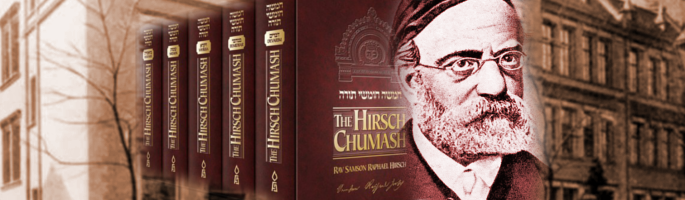
[1] Based on the Hirsch Chumash, Bereishis 46:1-4
[2] Based on the Hirsch Chumash, Bereishis 47:22