

How to Emerge From Galus1
I will remember my Yaakov-covenant (בריתי יעקוב) and also my Yitzchok-covenant, and also my Avraham covenant will I remember, and and I will remember the Land.
For many people, the formula for ending galus is simple. Do teshuva; end galus. Our parshah suggests that there may be more to it than that.
Most people intuitively translate our pasuk as “my convenant with Yaakov,” etc. We would have expected, however, that the Torah would have used a preposition like עם יעקב, or at least implied one by writing את יעקב. Taken at face value, the pasuk speaks of three different covenants, each one bearing the name of one of the avos, and following the contours of the life of the person for whom it was named.
Another covenant should be understood similarly. Hashem rewards Pinchas’ zealousness and bravery not with a covenant of peace, as most assume, but a shalom-covenant, a covenant assuring that the world would ultimately arrive at a time of G-dly tranquility and well-being. Pinchas is made part of that covenant because progress towards a euphoric state of affairs cannot be entrusted to the weak and irresolute. It will take people with Pinchas’ qualities to bring the promise into reality.
The three covenants of our pasuk share much in common. All of them speak of closeness to G-d Who supervises all aspects of the lives of the people. All of them are necessary for the development of the Torah nation. Each one then heads off in a different direction from the other two.
Avraham stood alone against the positions and feelings of an entire world. Yet he was not molested or persecuted for his differences. To the contrary, he was accepted as “a prince of G-d” [2] His material success was not met with the jealousy of others, and he was permitted to speak his mind in calling on all to serve the One G-d.
Yitzchok also did well, but his message engendered jealousy and hostility. He was not openly opposed, but his rejection by others meant that he was forced into a life of isolation, living without closeness to others, but making his own family his world.
For Yaakov, life was a succession of struggles. Maariv, the evening prayer that he instituted, was emblematic of his life of darkness, punctuated only by brief periods of full contentment and happiness.
Our pasuk tells us that Jewish history would not follow a single path. Galus itself would lead us down different paths. Each of these life-patterns is a separate covenant. The Jewish people would need to experience – and develop within – each. Hashem would stand by them through the trials and tribulations that each would bring. They would move from one to another when they successfully navigated the challenges of each, and would thus be ready for the next set of circumstances.
The covenants are presented in our pasuk in reverse order to the chronology of the avos. We would have to live by the Yaakov-covenant before moving on to the Yitzchok-bris, which in time would transition to the Avraham-covenant. Moreover, the Yaakov-covenant seems to be the focus and centerpiece of the pasuk. The other covenants are simply adjuncts, joined to the main covenant with the word “also.” It is probably significant that Yaakov is spelled malei – with the optional vav. It augurs a larger role for his covenant.
All of these elements combine to depict the progress of our long galus. The longest period would be spent in the Yaakov phase, a long, dark night of persecution and bloodshed. Jews would realize that their suffering was purposeful – that it addressed their earlier shortcomings by demanding absolute loyalty to Hashem and His words. Jews would be scorned, hated, dealt with contemptuously, but they would not abandon His Torah. In time, they would fulfill the terms of this covenant. The other nations will be moved in part by their tenacity, and lifted to a higher place by the ideals by which they lived. This partial enlightenment would leave them somewhat kinder and gentler; the persecution of Jews would ease somewhat.
With this, they enter the second phase or covenant – that of Yitzchok. Living in increased prosperity, Jews would be tossed back and forth between two attitudes of a conflicted world community. On the one hand, the nations would ask that Jews be treated humanely. On the other, the now-ascendant Jews would suffer the envy and jealousy of others.
How would they react to their newly acquired well-being and opportunity? The Yitzchok-covenant calls for Jews to live like their forebear, apart from others, refusing to assimilate. They would understand that the privilege of prosperity comes with responsibility. They were to use their new blessings to increase their devotion to Torah, not for their own self-indulgence.
When this would come to pass, they would be ready for the final stage, and the final covenant. After Jews demonstrate that Man can utilize G-d’s blessings to him entirely for positive purposes, the true mission of the Jewish people will dawn upon the nations. They will realize that Klal Yisrael had been entrusted millennia earlier with Hashem’s Torah in order so that they should take it forth into history and into the world, and eventually enrich all of mankind through it. No longer would they be hated or subject to jealous contempt. Indeed, they would no longer be tolerated despite being Jewish, but honored because they were Jewish.
Only after this covenant would be fully fulfilled will the final phrase of our pasuk become a reality. With its completion, the tripartite galus could come to an end, and Hashem’s people could return to their Land in peace and tranquility. Upon that special land, they would demonstrate the beauty of living according to G-d’s plan in the physical environment most conducive to wringing the most meaning out of the mitzvos – the holy Land of Israel.
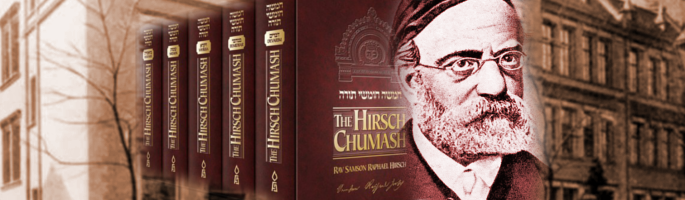
1. Based on the Hirsch Chumash, Vayikra 26:42
2. Bereishis 23:6