

Divine Service With a Smile1
They shall not make a bald spot on their heads, and they shall not shave a corner of their beard. In their flesh they shall not cut a cutting. They shall be holy to their G-d…for the fire-offerings of Hashem…they offer, so they must remain holy[2].
There is not much new here. All of these prohibitions have been stated before, and apply to everyone, including the vast majority of people who are not kohanim[3]. Why does the Torah need to carve out a special place for these laws in regard to kohanim?
Two of the three prohibitions deal with our reaction to death. Many religions, old as well as new, have a special relationship with death. Death is where G-d takes over. G-d asserts His power specifically in overcoming life, which He abandons to the whims of Man. By dealing illness, death and destruction, G-d forces Man to recognize Him and fear Him. He remains, however, foreign to life, from which He is excluded as an active force.
Even faiths that theoretically involve G-d in all matters of life are often unsuccessful in having adherents pay much attention to anything but the finality of death. Priests are called upon by people to minister to the dead or dying who had no use for them in the bloom of life. The most impressive ceremonies address the aftermath of life rather than life itself; places of worship are often literally juxtaposed to graveyards. Sometimes, the ceremonies for the dead will compel the faithful to think of their mortality while they are still living, and concern themselves with their hope for immortality – of life after death.
The Torah wants us to preoccupy ourselves with life, not with death. The kohen must serve as representative of the values of a full, rich life, enjoying its myriad blessings in the context of service of Hashem while elevating them towards His values. The kohen is the symbol of living to our fullest capacity, of avoiding the countless half-deaths we inflict upon ourselves when we remain limited and bound by our physical urges and flaws of character. The Torah insists that the kohen remove himself from the entire arena of death.
When the living gather to perform the final acts of chesed to a lifeless body whose soul had departed for the next world, the kohen does not preside. Moreover, he stays away entirely. He makes only two exceptions. When a close relative dies, the bonds and responsibilities of family trump those of responsibility to the rest of the community. He therefore participates in the burial of parents, siblings, children and spouse. If he should chance upon lifeless remains that no one else attends to – a meis mitzvah – he foregoes his priestly role and takes up the primary role of fellow human being, responding to the image of G-d that would otherwise be desecrated.
Others reacted to death by proclaiming that they were irrevocably diminished through their loss. They did this by tearing out hair and creating bald spots, or by cutting into their flesh. Both of these practices are forbidden to ordinary Jews. Our pasuk tells us that they are doubly forbidden to the kohen. He can never wear messages about death upon his body. Whatever he broadcasts has to be a message about life.
Ancient religions also paid homage to the very human foibles of their gods, who often lost themselves in hedonic abandon to their sensuality. Glorifying the sensual thus celebrated the various gods. Some of this preoccupation with the sensual has survived thousands of years of history and remains part of some modern faiths.
Here, too, the Torah wants the kohen to have nothing to do with such mistaken deviance. It is forbidden for all Jewish men to shave the “corners of the head,” the boundaries that separate between the various bones of the head. The upper bones encase the more cerebral and intellectual functions; the lower ones participate in eating, the most common form of sensual gratification. The prohibiting against shaving keeps the lower bone, symbol of more animal-like behavior, modestly concealed and covered. Here too, the Torah wishes this emphasized in the appearance of the kohen. He must remain a symbol of devotion to higher concerns that generate elevation rather than capitulation, and life rather than death.
Unlanded Gentry4
You shall count for yourselves from the morrow of the Shabbos…seven weeks…fifty day. You shall convoke on this very day…you shall do no laborious work…When you reap in the harvest of your land, you shall not remove completely the corners of your field as you reap, and you shall not gather the gleanings of your harvest. For the poor and the ger shall you leave them. I am Hashem your G-d[5].
Why do some of the laws of the mandatory gifts to the poor appear just at this point, as if forgotten somewhere else, and dropped in to a long section that deals with the holidays alone?
In getting us to Shavuos, the Torah has twice brought home an essential idea about the entitlement of individuals to sustenance and happiness. Through the avodah of the omer on Pesach and that of the shtei ha-lechem on Shavuos, the Torah reinforces the idea that the source of each individual’s contentment and prosperity is the Torah and its relationship to the Nation of Israel. The Jewish People carry the message of the Torah into the larger world; each of its members derives his portion from his connection to the Torah.
This might seem so obvious that it scarcely is worthy of mention. Practically, however, this assertion is a sea-change from the realities of both the ancient and modern worlds.
The gap between the haves and the have-nots is not just quantitative. The very difference between life and death of have-nots often lodges in the whims of the haves. Those who have provide, at their pleasure, enough for the have-nots to sustain themselves. They offer this as a form of noblesse oblige, and don’t take kindly to suggestions that this can be demanded of them. What they offer is charity, not fulfillment of a human duty.
In the ancient world (as well as across major swaths of the modern globe), the distinction between the two kinds of people concerned land. Those who had land were the haves. Those who lacked it lived at the mercy of the landowner. What they received was accompanied by feelings of insufficiency, inadequacy and humiliation.
The omer and shtei ha-lechem offerings told a different story. It was not land (or what modern society would call access to the means of production) that provided sustenance, but connection to the Torah. Those who received more had to see themselves as custodians of plenty on behalf of those who had less. The harvest did not belong to the rich and the landed, but to everyone. The landed citizens were simply conduits to direct G-d’s blessing to a wider group of end-users.
Precisely after the section of the shtei ha-lechem the Torah details some of the matnos aniyim. Our pasuk stands in stark relief to the reality that the poor of other cultures are fed though the good will of the rich. Here, the Torah sends the poor into the fields at harvest, to help themselves to what Hashem has ordered the earth to yield up. The harvest is for them as much as for the landowner. It follows neatly from the message of the shtei ha-lechem, and is the perfect postscript to it.
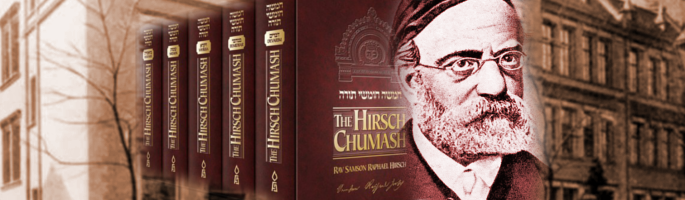
1. Based on the Hirsch Chumash, Vayikra 21:5
2. Vayikra 21:5-6
3. In the case of two of them, Makos 20A-21A derives certain details in which the prohibition to kohanim varies slightly. The basic prohibitions, however, apply to all
4. Based on the Hirsch Chumash, Vayikra 23:22
5. Vayikra, 23:15-16; 21-22