

Color Me Needed1
You shall not place a cut for the dead in your flesh, and a tattoo you shall not place upon yourselves. I am Hashem.
Cutting the flesh and tattooing are not forbidden by the Torah. Despite what our pesukim seem to say, the preceding sentence is perfectly defensible.
Were it the act of cutting the flesh as a sign of mourning for a loved one, the Torah would have expressed itself differently. If making a permanent mark or tattoo on the body were an objectionable act, if this were considered an affront to some assumed sanctity of the human body, the Torah would have used a different verb to describe the prohibition. In both cases mentioned in our pasuk, verb forms exist that could better pinpoint the activity that is objectionable and forbidden.
In both cases, though, the Torah expresses the prohibition as a forbidden nesinah, or “placing.” You shall not place a cut…you shall not place a tattoo. The Torah does not prohibit the cutting and tattooing per se, so much as having that cut or tattoo remain in place as a statement to the rest of the world.
In the case of the flesh-cutting for the dead, we are looking here at something similar to the tearing of a garment as a sign of mourning, which not only is not objectionable, but is a commanded part of our mourning procedure. Our clothes are physically the closest things to our own bodies. When we lose a dear relative, we acknowledge that our personal world has sustained a breach. Its material has been torn. Its wholeness has been disturbed; where it all came together, there is now a jagged edge and a gap filled with emptiness.
Such a statement of loss is both poetic and appropriate. The Torah teaches, however, that it becomes excessive when we apply it to our bodies, to our very selves. Placing that cut on our persons conveys the idea that it is not just our personal worlds that have become darkened and insufficient, but our very lives. Wearing that cut upon ourselves expresses the thought that the passing of someone dear to us leaves us forever lacking and incomplete.
This is almost sacrilegious. We should never doubt the value of our own existence. First of all, our existence is not ours to savor as we please. All that we have belongs to Him, and we are to employ it all in His service. We cannot excuse any part of it from that service, by declaring it non-functional, by insisting that its vital force has been so drawn out of it, that it is for all intents and purpose a ghost of its previous self.
Secondly, He is not arbitrary. Each person has his place, his function. Each has his unique value to Him. The death of one individual should not lead to despair and lethargy in a survivor. To the contrary, belief in a G-d Who is purposeful and deliberate demands that we understand the loss of any human being as a loss to the world – and therefore demands that we who live on must work harder to compensate for the loss, rather than retire to brooding and moroseness.
The gemara[2] sees an organic relationship between lacerating oneself as a sign of mourning, and doing so as an idolatrous devotion, such as the priests of Baal did. (“They gashed themselves as was their practice with swords and spears[3].” ) This opens us up to the possibility that one of the Torah’s objectives in prohibiting the mourning-cut is to firmly oppose the pagan world’s attitude towards death. Ancient idolaters saw Death as an independent power that delighted in draining life from the living. Human beings were essentially powerless in all their interactions with the gods. Human success or failure in dealing with them was contingent on winning their favor by appeasing them. You won their approval or at least their benign tolerance by paying homage to them. When a survivor contemplated the death of someone close to him, his best form of protection was to acknowledge the terrible power of Death by paying tribute to it. The self-mutilation was that tribute; through it, a person hoped to avoid the same fate.
The Torah, of course, knows of no independent power of death that seeks to quash life. The Torah knows of no independent power outside of G-d, period. Both life and death owe equally to Hashem and to nothing else. As hard as it may be for creatures of flesh and blood to emotionally comprehend, life and its opposite both flow from the goodness of the One G-d who celebrates life and love. It follows that sacrificing a life – or even a small fraction of one – in recognition of the death of another can never pay homage to Hashem. To the contrary, any statement of profound, irrevocable loss borders on blasphemy. The same G-d who decreed the death of one person decreed that the survivors remain alive. Life means that He has expectation invested in us. To deny that we remain capable of living fully is nothing less than a repudiation of Him and His plans for us!
The tattooing prohibition also highlights the difference between idolatrous belief and the true faith. The gemara’s discussion[4] makes it clear that the starting point of the prohibition is etching into one’s skin the name of another deity. Here, too, the Torah speaks in terms of placing the mark on oneself, rather than the act of tattooing. Placing such a name on one’s flesh is a sign of subservience and devotion. This part of the prohibition is intuitive.
The majority opinion in the gemara, however, holds that the prohibition applies equally to all inscriptions. The Torah extends the basic prohibition to include much more than the names of foreign gods[5]. It follows that tattooing Hashem’s Name on one’s flesh is equally prohibited! What could be objectionable about a person displaying his devotion to his Creator by proudly dedicating his very body to His service?
Here is where the Torah point of view once again stands all other assumptions on their head. In other faiths, people make a decision to join the faith-group and devote their energies to its goals. Until you make that decision, you are an outsider. Torah Judaism does not see our service of Hakadosh Baruch Hu as a matter of preference or choice. Human beings are obligated in His service because they are created in His image. They need no other reminder of their obligation. Any external sign etched on to the body created in His image gives the false impression that entering into His service is a matter of choice, rather than inherent in the human condition[6].
Both of the prohibitions we have considered – cutting the flesh and tattooing – are similar. Each begins with a rejection of the mistaken notions of paganism, but ultimately go well beyond that. They lead to recognition of the proper relationship we maintain with HKBH, far away from the debased subservience to dark forces that remains part of contemporary life, centuries after the old gods disappeared from Western consciousness.
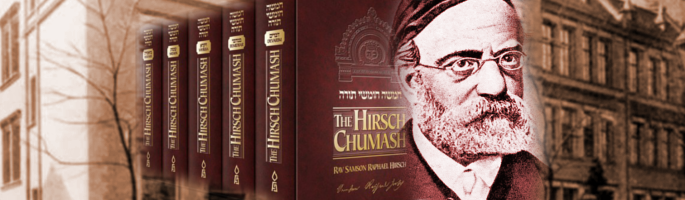
1. Based on the Hirsch Chumash, Vayikra 19:28
2. Makos 21A
3. Melachim I 18:28
4. Makos, ibid.
5. See Ritva s.v. Rebbi Shimon
6. Rav Hirsch does not pause here to consider bris milah, which midrashim understand as indeed providing a reminder of a Jew’s subservience to Hashem. Rav Hirsch’s commentary to Bereishis, however, makes it clear that he believes that bris milah says much more than that, and therefore does not conflict with the thesis he develops here.