

Out of Bounds1
Hashem said to Moshe: “Bring back the staff of Aharon before the Testimony as a safekeeping – as a sign for men of rebellion. Let their complaints against me cease, so they will not die.”
Could success ruin Torah? There is good reason to think that it could – but the Torah, as usual, is one step ahead of us.
Korach’s rebellion simply didn’t go away. The fire-pans of the ill-fated group of two hundred and fifty who sought Aharon’s position were not destroyed, nor did they disappear into the bowels of the earth like Korach and his gang. Instead, they became a permanent part of the altar, forever memorializing the episode and its lessons.
Yet even more dramatic is the aftermath of the staff-sprouting trial. We would think that once Aharon’s credentials were supported by miraculous Divine intervention that Aharon’s role and that of his descendants would be secured for all time. The Torah seems to think differently. Here, too, the Torah asks that we memorialize the incident, but in an even more dramatic way. Aharon’s staff beomes inextricably linked to the Ark containing the luchos. This turns Aharon’s mateh into a high-profile reminder, somehow linked to nothing less than Divine Revelation at Sinai.
We propose that Aharon’s staff continues the events of Revelation into the distant future. Looking back, we realize that how Matan Torah occurred was almost as important as the fact that it occurred. Prior to the giving of the Torah, Hashem required that the mountain be cordoned off, leaving its slope off-limits to all but a few. This impressed upon the people that the Torah came to them, rather than from them. Torah was entirely of Divine origin, and had to be given to them according to the terms of the Giver. It was not a Magna Carta of the Jewish people, some agreement arrived at by the many. The people had no say in it, other than to choose to receive it. Every part of it emanated from a higher place, from a Divine Lawgiver, not from human beings attempting to discern the mindset of their Creator, or how to best serve Him.
Hashem saw fit to keep this essential idea about Torah prominent in the minds of the Jewish people. Once erected, the mishkan would serve as a constant reminder of the Revelation at Sinai. The ultimate focal point of the mishkan was the aron in the kodesh kodashim, housing the luchos, which were the physical consequence of Ma’amad Har Sinai. Here, too, HKBH insisted on the same pattern of hagbalah, or cordoning off the holiest area, and allowing others to approach to different points, similar to the positioning of some people at different elevations of the mountain. This cordoning off was accomplished by buffer zones – areas immediately around the mishkan that were allocated to the kohanim and the levi’im, with the remainder of the people encamped around them.
This seems reasonable and appropriate enough. We realize that there will be different levels of spiritual attainment among the people. No one questioned at the time that Moshe should be able to ascend the mountain, while the bulk of the nation stood in trepidation at the base. Neither did people object to allowing known leaders and models like Aharon’s sons to position themselves on the mountain, part of the way up to the top. People understood that some deserved positions of closeness to the Divine Presence.
There is a corollary to this, however. What will people think at a time that Torah has taken hold well of a community, and allowed its members to spiritually soar? What happens when the ideals of the mishkan are thoroughly studied, appreciated and internalized, so that there is less and less difference between what all the avodah symbolizes and the actual conduct of the people? Paradoxically, as the Torah nation improves its conduct in the course of time, the argument of Korach becomes more attractive. All of the people are holy! The difference between their weakest and their greatest has shriveled and shrunk. Perhaps all distinctions should be dropped, providing equal access for all to the Shechinah!
There is great danger in such an attitude. It can easily slide into heresy. As people believe that they approach the lofty goals of Torah, as they imagine that their minds are more in synch with that of the Divine, it becomes easier to think that lofty human beings were also the Torah’s creators. Such great minds find it easier to assert that those like them founded the religion through their own gifted imagination. They say to themselves, “That really resonates. We really understand that. We should have thought of that ourselves. Upon reflection, maybe we actually did…”
To this end, the continued hagbalah of the nation serves as a reminder of the Heavenly source of the Torah. The nation can come only so far. More importantly, the kohanim themselves, symbols of the refined, enlightened souls who are closer to G-d, can only come so far. They can approach only after they have been chosen by G-d Himself (as demonstrated by the placing Aharon’s staff close to the Aron), only after preparing themselves through the kiddush of hands and feet in the kiyor, and even then only as representatives of the people, garbed in their special begadim, but not in their individual identities.
The mishkan serves to make the Shechinah immediate and approachable. Yet, in His great wisdom, Hashem leaves its core essentially impenetrable and unapproachable, reminding us of that Torah may be for us, but it is not of us. The specious argument of Korach has everlasting allure; the Torah therefore includes within the protocols of the mishkan strong reminders to resist and repel it.
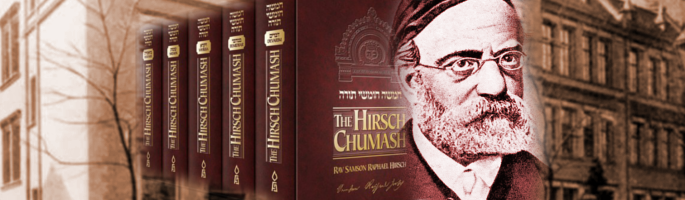
1. Based on the Hirsch Chumash, Bamidbar 17:25