

Mikvah, Explained1
- Only the gold and the silver…everything that comes into the fire you shall pass through the fire and it will be purified. But it must be purified with mei-nidah. Everything that does not come in the fire, you shall pass through the water.
This passage is a dream for the serious fan of halacha. It is also a nightmare.
It is a dream, because crammed into this short section are references to three important halachos with much practical application: purging utensils of forbidden substances, purifying them from tumah, and immersing new utensils in a mikvah. The nightmare part is figuring out which phrases belong to which halacha, and why the halachos are presented in the order that they are.
The first sentence is the least ambiguous. It refers to purging metal utensils of non-kosher substances absorbed through the direct application of heat. The pasuk tell us that what goes in through direct heat goes out the same way. The metal utensil must be held in the fire to purge it of its absorption. We call this libun. The second sentence could refer to tumah. It would then essentially say that even after ridding the utensil of its non-kosher absorbed flavors, its tumah has to be addressed by sprinkling it with the sprinkling water of the parah adumah mixture[2]. The last pasuk contrasts the above utensils with ones that did not absorb non-kosher ingredients through fire, but were used for cold contents. These need not be purged, but need to be “passed through water,” i.e. they need to be immersed in a mikvah. This would only apply to metal utensils, consistent with the first sentence, and of course only to utensils acquired from non-Jews, just like those in the parshah that were taken as spoils of war from the Midianites.
All the sections have been assigned a function, but something still is unsettling about this approach. If the second sentence deals with purifying utensils from tumas meis, why is it sandwhiched in between the first and last sentences? A utensil used for cold storage or service can also become tamei, and therefore also require sprinkling with parah adumah mixture. This halacha should have come last, and modified both hot- and cold-use utensils[3].
Alternatively, the second sentence instructs us not to purify the utensil from tumah, but to take it to a mikvah. The reference to mei-nidah would mean that metal utensils acquired from non-Jews must be immersed in a regulation-size mikvah suitable for the immersion of a nidah[4]. In other words, it need contain a full forty sa’ah of water[5]. The last sentence would contrast the previous two, and speak about utensils that were not and could not be used with fire, because they are non-metalic. They need to be rinsed with water, but they do not require immersion in a mikvah.
If we take the second sentence to refer to immersion in a mikvah, the verb “yischatah” should not be translated as “purified,” but would be closely related to the word “chet.” A chet is a sin; its primary meaning though is related to the idea of missing the mark, to be off target and in error. (Every sin is an error.) By demanding a full mikvah of forty sa’ah, the pasuk would be turning these utensils into symbols of Man himself. Just as Man requires forty sa’ah, so do these utensils. A person who steps into a mikvah leaves behind some lesser part of himself. He rids himself of some level of unholiness, or pedestrian existence. The immersion of the metal utensil, apparently, does the same.
Armed with this bit of understanding, we are ready to unravel the mystery of mikvah. Halacha restricts the need for immersion to metal utensils, but only those used in the preparation or serving of food. Why would this be?
If we focus on the idea of leaving behind a lesser existence in the mikvah, we can easily arrive at the answer. Metals, more than other traditional materials, bear the greatest imprint of Man’s intelligence. Other ancient materials like wood and clay do not approach the utility of metals. Metals can be bent, shaped, formed into all sorts of shapes, suitable for all sorts of purposes. Metal utensils symbolize the higher aspect of Man, the part that intelligently conceives of a goal and then sets out to realize it through cleverly designing the implements to do so.
Not all metal utensils, however, require immersion in a mikvah. Only those whose function pertains to human food must go to the mikvah. Now, eating is hardly one of Man’s higher functions. Anything alive one way or another must ingest material to keep on functioning. The halachah of mikvah mixes the highest part of Man with the lowest.
The laws of mikvah for utensils merge the higher parts of Man with his most primitive. Rather than see this as an anomaly, we must see this as the central theme of mikvah for utensils. Metal utensils used for food represent the conjunction of Man’s higher, i.e. intellectual and spiritual abilities with his physical instincts that are shared with the animal kingdom. This meeting can go in one of two ways. It can subvert Man’s higher abilities in service of the more primitive, or it can do the opposite. The Torah does not abandon parts of Man and parts of life as unworthy and un-spriritual. When we use our spiritual gifts to appreciate Hashem’s words and design for our lives, we raise up the lesser parts of ourselves and turn them into spirituality. When we take a metal utensil to mikvah, we inaugurate it into a use very different from the ethic of the rest of mankind.
When we do this, we underscore the importance and prominence of the intellectual and spiritual sides of ourselves – the very tools we need to resist sin. “Yischatah” indeed turns out to mean that, through the immersion of kelim, we rid ourselves of sin.
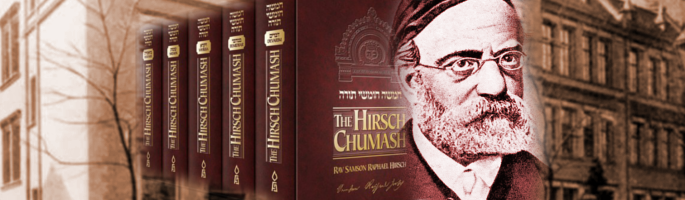
1. Based on the Hirsch Chumash, Bamidbar 31;23
2. Mei-nidah would then be translated as “sprinkling water” or “waters of separation” or “waters of restriction.” See Bamidbar 19:20 where the parah-adumah mixture is called mei-nidah
3. Note that Rashi first supplies the approach just mentioned in the text as the simple pshat.
4. This is consistent with the second approach offered by Rashi, citing Chazal.
5. To rid a keli of various kinds of tunah, a mikvah need not contain forty sa’ah, but enough water in which to completely submerge the utensil. A small utensil could be immersed in much less water than forty sa’ah.