

The Two Keruvim1
We will only understand the keruvim by starting at the core, and working out from there.
The keruvim sat atop the aron. It, in turn, housed the luchos. Those luchos provide the key to all that surrounded them. They symbolize, of course, the totality of the Torah. The two tablets are the physical representation of our receiving the Torah directly from Hashem.
The aron represents how we continue to host that Torah. It is made of gold and wood. In incorporating Torah within our own lives, the message of Torah is challenged by many manifestations of evil. We are instructed that nothing less than the purity of gold will suffice to meet that challenge. Half-measures and half-hearted measures will fail; insipid, watered-down approaches will not stand up to the ravages of evil.
Resistance to evil, however, cannot be static. Life, in its rich complexity, demands of Man that he forever change and grow. Thus, the other ingredient of the aron is wood, which brings to mind the organic development and growth of a tree, alive, growing, forever pushing higher and higher.
What, then, is left for the kapores, the cover of the aron which is treated in the text to as much detail as a separate keli? A rich assortment of words all derive from the same root, including those for pitch, village, a lion leader, and atonement. These all share the theme of covering, protecting and guarding. In our section, the kapores is the covering placed atop the aron to protect it. The keruvim are not separate items secured to it, but are “hammered out…from both ends of the kapores[2].” As integral parts of the cover, they tells us something about how we are to protect Hashem’s message, contained in the aron below.
Their physical arrangement tells us of at least two different kinds of protection. Their upswept wings hover over the aron, shielding it. We are required to do the same, by creating protective legislation to safeguard the Torah’s statutes. These are the fences around the law, the siyagim and gezeros that Klal Yisrael lovingly sets up to insure against violation of Hashem’s commandments.
At the same time, the gaze of the keruvim is directed downward. “Toward the kapores shall be the faces of the keruvim[3].” The Torah instructs us about another layer of protection. The Torah needs to be understood. We have to direct our mental concentration at it, carrying out its precepts with intelligence, not simply by rote.
When we look for other appearances of keruvim in Tanach, we realize that they fall into two groups. Some simply protect, like those appointed to stand guard at the entrance of Gan Eden[4]. Others, however, have a very different function. In Yechezkel[5] keruvim bear the Presence of Hashem. Dovid describes Hashem as yoshev ha-keruvim[6], emplaced upon the keruvim. In these instances we see the keruvim as carrying the Glory of G-d.
We note again that the keruvim were not separate items affixed to the kapores. Rather, they seem to grow out from the kapores itself, the article that immediately stands over and preserves the Tablets of the Law. The Torah tells us about the consequences that organically grow out of guarding and protecting the Torah. By doing this, we become keruvim to the Torah, in both of their roles. In the course of protecting the Torah, we protect ourselves as well! And by taking upon ourselves this task, we merit becoming bearers of Hashem’s Presence. (The posture of the keruvim suggests such a function. The keruvim do not simply spread a winged blanket above the aron. Rather, their wings sweep up and out, as if forming pedestals to bear something placed on them from above, which we understand to be the Divine Presence.)
In effect, the aron is a mini-mikdash; by “making a sanctuary[7],” Hashem promises here as well that “I will dwell among them[8],” with the Divine Presence calling out to Moshe as if from between the two keruvim.
Those two keruvim represent a Klal Yisrael, vigilant in safeguarding the Torah through preventative devices and serious study. Through this, they become the bearers of His Presence.
We have only to find the reason for one last detail concerning the keruvim. Why two, rather than one? The answer, in part, may lie in the contents of the aron that each of the two keruvim peer down at. The luchos were placed in the aron side by side, one next to the other. In effect, each keruv safeguarded one of the luchos. As the two keruvim turned to each other, they symbolized the complete interdependence of the two luchos, or more accurately, of the mitzvos between Man and G-d and the mitzvos between Man and Man. Klal Yisrael becomes a bearer of Hashem’s Glory only when it pays steadfast attention to the demands Hashem places upon them as its Sovereign, and is equally fastidious in responding to the needs and concerns of all of its members. Only by serving both of these goals is the Torah protected, and a place readied in the hearts of Man for His great Presence.
You Can Take It With You9
They are not what they seem to be. You might say that there is more to the poles of the aron than what meets the eye – but meeting the eye is important as well.
The poles, we would think, are functional. They enabled the Bnei Kehos to carry the aron from place to place. This is incorrect. The Torah attaches a prohibition to these poles, by specifying that they never be removed, even when the aron was at rest and not in need of transportation.
Practically, the poles served another function as well. The aron housed the luchos, the national memento of national Divine revelation. The individual Jew, however, never saw the luchos directly, and never even laid his eyes upon the aron, sequested behind the paroches. It was the poles that connected him with the greatest moment in human history. They pushed out the paroches from their place in the Holy of Holies, reminding Jews what stood behind the curtain.
The function of the poles, then, was symbolic and instructional. They took the people back to Sinai, and reminded them that the Torah that they received there is not limited or confined to any one place or country. Torah will always be portable, ready to be picked up and carried to wherever G-d would send it. Jews must live in a state of preparedness, knowing that the Torah could successfully be transplanted anywhere.
All this contrasts with two other kelim which also had poles: the shulchan and the menorah. No prohibition concerning their removal attaches to these two sets of poles, however. Indeed, the functions that they symbolize – national material well-being, and the clarity and brilliance of an illuminated life – are linked to a particular place. These blessings are only maximized in the holy Land apportioned to us. Torah, on the other hand, is for all places.
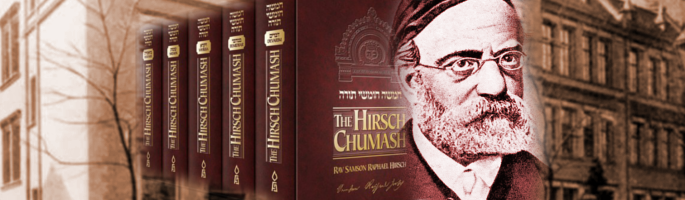
1. Based on the Hirsch Chumash, Shemos 25: 16-20
2. Shemos 25:18
3. Shemos 25:20
4. Bereishis 3:24
5. Yechezkel 9:3, 10:18
6. Tehillim, 80:2
7. Shemos 25:8
8. Loc. Cit.
9. Based on the Hirsch Chumash, Shemos 25:13-15