

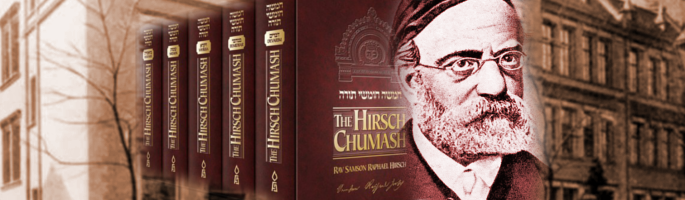
The Two That Couldn’t Wait1
Now you shall command the Bnei Yisrael that they shall take for you pure, pressed olive oil for illumination, to kindle the lamp continually.
Two items on the list [2] of materials to be used in the mishkan seem to be out of place. All the materials that the Torah specifies at the beginning of parsha Terumah went into the actual construction of the mishkan, except the “oil for illumination, and spices for … the aromatic incense.” Those two were used as part of the avodah in the completed mishkan, not for its construction. The messages attached to these two are so important and central to the function of the mishkan-to-be that preparing them in advance was crucial. They sum up the most important objectives of creating an abode for the Shechinah.
The oil for the menorah represents the perfect illumination that Hashem’s Presence conveys to us. That illumination gives us the insight, the clarity with which to properly lead our lives.
The “pleasant aroma” of the ketores beautifully encapsulates goal of the entire enterprise: that Man should direct all of his activities without exception to pleasing G-d. This is a lofty goal. Man does not turn around his life and dedicate it solely to the service of his Creator in a moment of inspiration. Only a person already brought to a higher place, already possessed of ennobling qualities can aspire to such a lifestyle. The many symbolic lessons designed into the construction and function of the mishkan, coupled with Hashem’s Presence there, can bring Man to such a place.
The opening of our parshah has the oil burst on to the scene unexpectedly. We would have supposed that once the construction details of both the mishkan and its kelim were completed in the last parshah, the Torah would then turn to the special vestments of the kohanim. It does – but not before it interjects a few lines about the oil, and its function in the daily lighting of the menorah. Once again, the Torah seizes an available opportunity to underscore the centrality of the menorah’s lesson to the very purpose of the mishkan. (The Torah could not do the same for the ketores at this point. While the menorah has already been discussed, the composition of the ketores has not. Any reference to it would not make sense at this point without making some other serious textual modifications.)
Bringing back the oil at this point (by describing the avodah of the menorah) has two effects upon us. It accentuates the importance of clarity in our service of Hashem, by awarding pride of place to the avodah of the lights, introducing it before all services in the mishkan . As Chazal tell us, Torah is great because it brings us to proper activity. We cannot possibly know how to grow towards Hashem’s expectations for us unless we have unambiguous instructions on how He wishes us to act. The menorah stands for, in part, this unambiguous course of action, which is a necessary precursor of getting any avodah right, whether it be the avodah of korbanos, or the avodah of the mitzvah system in general. Because the kohanim bear the responsibility for the avodah of the menorah, the seemingly premature invoking of it at this point drives home the point that the chief function of the kohanim is to take the menorah’s enlightenment, and nurture it. Through their ministering to the spiritual needs of Klal Yisrael, the kohanim keep that enlightenment strong and vibrant.
Chazal emphasize that the verb “command” – as in the instruction in our pasuk to command the Bnei Yisrael – indicates special importance. It is used when there is permanence to the order, i.e. when a mitzvah applies not only for the moment, but for all time. It is used to indicate seriousness, i.e. that it applies even in the face of expected monetary loss, and requires that the practitioner have enough insight to realize that he is trading some temporal pleasure for eternal spiritual elevation. In our pasuk, Moshe, the one who conveyed the Torah from Hashem’s world to ours, is told to “command” the Jews to take the special oil. This means that they are to take responsibility for the central duty of illumination and clarity. Moshe could bring the Torah down to them from Heaven, but theirs is the duty to study it, cherish it, make it theirs, and work with it assiduously until it provides the illumination that is its gift and promise.
The division of labor regarding the menorah points to what we have said. Kohanim must perform the hatavah – the preparatory cleaning and replenishing of the lamps. In other words, they provide the nurturing of the light. The lighting itself does not require a kohein; even a Yisrael may light the menorah. Anyone can (and ultimately must) approach the Torah, therein to find the illumination he seeks to dispel the darkness of uncertainty and doubt.
Not Just a Calling Card3
You shall make on its hem pomegranates…and gold bells between them, all around.
The color of the me’il gives away its basic symbolism. Reaching from torso to toe, the me’il’s blue color conveys the idea that the totality of the model Jew can experience purity. When the kohein looks at himself, he sees the blue reminder of the Heavenly Throne wherever his eyes rest. An ordinary Jew may suffice with reminders of his connection to Hashem on part of his body, such as bris and tefillin; in the case of the kohein, every limb and organ needs to be sanctified.
The symbolism becomes even richer when we look at the two items that are attached to the bottom hem. Pomegranates are famous for their abundance of seeds. (This is why we include them among the simanim on the night of Rosh Hashana.) This begged seems to promise rich, fruitful consequences to the person whose life is deeply connected with the Will of Hashem. They are placed at the very bottom of the me’il, emphasizing that the berachah that comes from Man’s obedience to G-d does nothing for the Heavens. The benefits are all for us earth-bound mortals.
The bells, we would think, are even easier to interpret. The Torah actually assigns them a function. They are to insure that “its sound be heard when he enters the Sanctuary before Hashem.” To do otherwise would be impolite.
This cannot be the entire significance of the bells, because the pasuk continues, “and when he leaves.” Why must he announce himself before leaving?
Rather, his announcement might very well be to his fellow Jews. Prior to entering before Hashem, the kohain makes known his intention to all. In doing so, he states that everything that he does is as a representative of the community, and not as a private citizen. To act as an individual would be presumptuous. He dares appear before Hashem in His special place only because he comes with the authority of Hashem’s chosen people.
He must do the same when he exits. This is even more important than upon entering. The impact of an encounter with the Shechinah can only be discerned by the effect that it has had on the person who has drawn near. If the experience has been important, he will look different after than he did before. If he must declare that he only undertakes to get close to the Divine Presence as a representative of the collective, he must all the more so make this declaration when he exits. When the people see a figure transfigured by the time he spent in close proximity to the Shechinah, it must be accompanied by a reminder that he acts on behalf of the community.
1. Based on the Hirsch Chumash, Shemos 27:20
2. Shemos 25:3-7
3. Based on the Hirsch Chumash, Shemos 28:31-35