

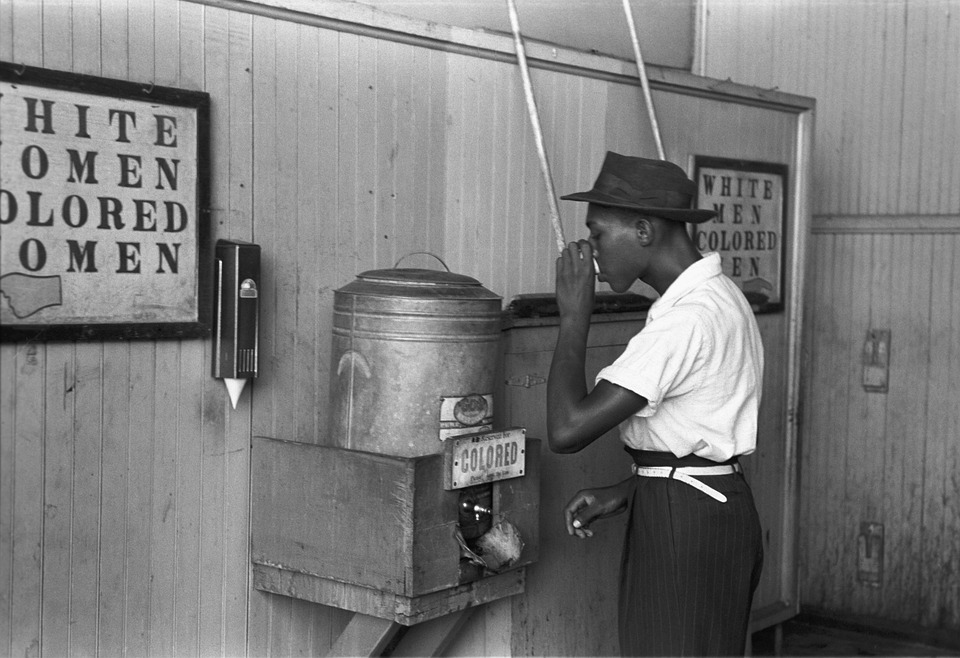

How many barricades have been stormed over the last few hundred years for the ideals of universal equality! How much blood has been shed! From earliest childhood we have been brought up to believe that all people are created equal, that no single individual has more rights or privileges or obligations than any other individual. We have been taught to aspire to a classless society, and to look askance at other societies that have rigid caste systems. Indeed, these are among the very foundations of the society in which we live.
In this week’s Torah portion, however, we find an altogether different view. The Torah describes the encampment of the Jewish people in the desert, each tribe occupying a specified position under its own banner. “The people of Israel did everything Hashem had commanded Moses,” the Torah concludes. “This is how they encamped and this is how they traveled.”
The question is obvious. Why make special mention of the compliance of the Jewish people with the divine instructions for encamping and traveling? What was so commendable about it?
The Midrash explains that the people were indeed to be commended for their unquestioning compliance. The Levites occupied the position of honor in the center of the encampment near the Tabernacle, while the other tribes, many of whom were superior in wisdom and knowledge to the Levites, occupied positions on the fringes. Nonetheless, to their everlasting credit, they did not raise any objections or attempt to push the Levites aside. They submitted willingly to the divine wisdom that had assigned hereditary roles to all the tribes.
But was this indeed a fair system? Was it right that for all generations no member of another tribe could aspire to the priestly duties of the Levites? What happened to upward mobility? How can this be reconciled with our contemporary conception of justice?
The answer lies in the difference between the Jewish attitude and the contemporary secular attitude. In the secular view, the purpose of each individual’s existence is solely for personal fulfillment. Therefore, if all people are inherently equal, their purposes are also equal, and no one should be allowed to take precedence over someone else.
In the Jewish view, on the other hand, all people are united in one common purpose, the fulfillment of the divine plan for the world. Each person in the world has a divinely assigned role which will allow him to contribute to the universal effort to fulfill the will of Hashem. Some roles are, of course, more prominent and prestigious than others. But in the greater scheme of things, everyone is of equal importance, since everyone’s contribution is essential towards achieving the greater common goal.
As we prepare for Shavuos, the Festival of the Giving of the Torah, these thoughts give us new insight into the statement of our Sages that at Mount Sinai the Jewish people “encamped together as one man with one heart.” The acceptance of the Torah engendered a profound unity among the Jewish people, because all their lives became focused on the single sublime goal of fulfilling the will of the Creator.
A great sage once asked his disciples a riddle. “Which part of a car is the most important?”
“The engine,” replied one disciple.
“The wheels,” said another.
“The transmission,” said a third.
“The driver!” called out yet another in a burst of inspiration.
The sage shook his head. “You are all wrong. If the car is missing any of these things you mention it cannot move. So you see, they are all of equal importance. But more important than how the car works is the purpose it serves. The most important part of a car is its passenger!”
In our own lives, we cannot help but feel occasional pangs of jealousy or resentment when we compare ourselves to others. But if we transcend the narrow parameters of our personal situation and see ourselves as playing a vital role in a vast universal plan, we can gain an altogether different perspective on the world. We will come to the realization that those people, whose superior endowments we resented, are not our rivals on the surface of this planet. All of us are on the same team. We are the wheels and the engines and the brakes and the batteries, and as long as we pool our individual talents and endowments for the greater purpose of fulfilling the will of Hashem, we will never have any reason to be discontented with the roles we have been assigned. Text Copyright © 2007 by Rabbi Naftali Reich and Torah.org.
Rabbi Reich is on the faculty of the Ohr Somayach Tanebaum Education Center.