

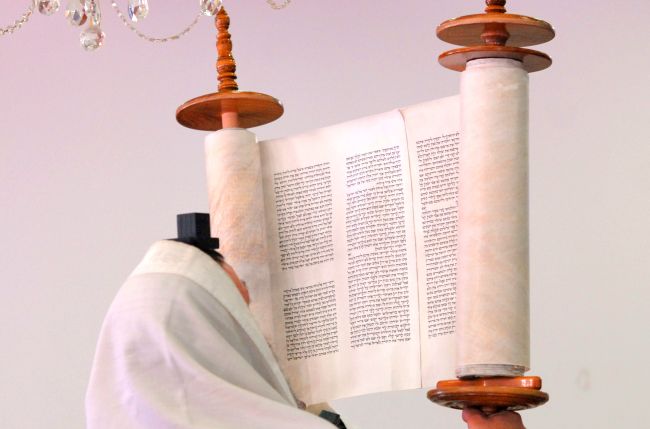
Note: The Shabbos Torah Reading is divided into 7 sections. Each section is called an Aliya [literally: Go up] since for each Aliya, one person “goes up” to make a bracha [blessing] on the Torah Reading.
1st Aliya:The service of Yom Kippur that was performed by the Kohain Gadol in the Bais Hamikdash is described. The Kohain Gadol may only enter into the Holy of Holies wearing his plain linen garments requiring that he change his garments five times and immerse in the Mikvah five times. The selection of the he-goats for the primary Teshuva process is described. This portion of the Torah makes up the “Avodah” that is the lengthy Musaf service on Yom Kippur.
2nd Aliya:Following the description of the remaining services for Yom Kippur, the Torah discusses the prohibition of offering a Korban outside of the Mishkan or the Bais Hamikdash. The only offerings allowed were those that were brought to the Temple. The “Bamah”, as an outside altar is called, was among the most prevalent sins for which the Jews were guilty.
3rd Aliya: The prohibition against eating blood is repeated. The end of Acharei Mos is devoted to a presentation of the fifteen prohibited sexual relationships. There is no doubt that G-d considers physical intimacy between a male and female as singularly important. Therefore, it is essential that there be a framework of controls for satisfying the physical.
4th Aliya:Homosexuality and bestiality are prohibited. Verses 18: 24-29 clearly state the unique relationship that the inhabitants of Eretz Yisroel have to the land and the consequences for defiling her sanctity. The beginning of Kedoshim states that holiness is realized through keeping Shabbos, being in awe of one’s parents, and not worshipping idols. Laws of charity, honesty, and paying wages on time are stated.
5th Aliya:Showing any deference while administering justice is forbidden as well as our responsibility to properly reprimand each other. The prohibitions against wearing shatnez – any mixture of wool and linen, cutting sideburns (payot) tattooing, premarital sex, and the use of the occult are stated.
6th and 7th Aliya:Proper and equal treatment for the convert, honesty in business, and the prohibition against worshiping the Molech are stated. The remainder of Kedoshim states the specific punishments that Bait Din would administer for engaging in any of the fifteen sexual relationships listed at the end of Acharei Mos.
The very end of Kedoshim (20: 22-26) explains the concept of holiness as the means for being separate from the other nations. Three basic formats for Kedusha exist: Time, place, and person. Acharei Mos began by presenting the ultimate integration of the three in the person of the Kohain Gadol entering the Holy of Holies on Yom Kippur. The end of Kedoshim states that Eretz Yisroel (place) the Bnai Yisroel (person) and time in general are intended to reflect the integration of G-dliness into the daily lives of individuals and nations. To the extent that we realize our mission as the kingdom of priests and a holy nation will be the degree to which we retain the right to dwell in the land of Israel.