

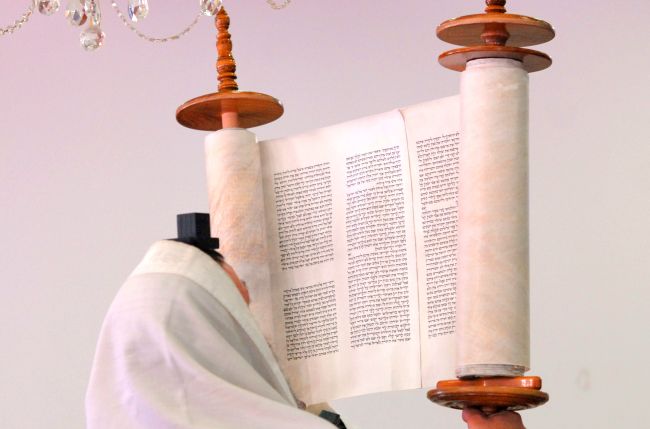
Note: The Shabbos Torah Reading is divided into 7 sections. Each section is called an Aliya [literally: Go up] since for each Aliya, one person “goes up” to make a bracha [blessing] on the Torah Reading.
1st & 2nd Aliyot: Moshe and Aharon forewarned Pharaoh about the Locust. His advisors begged Pharaoh to consider Moshe’s request, and Pharaoh attempted to negotiate with Moshe and Aharon that the children should stay behind. When his offer was refused, all negotiations broke down and Pharaoh chased Moshe and Aharon away. The Locust swallowed up Mitzrayim (Egypt), but Pharaoh still refused to send away the Jews.
3rd Aliya: Darkness enveloped Egypt for three days. Pharaoh told Moshe that he could take out his people, but he had to leave the cattle behind. Moshe refused and Pharaoh forewarned Moshe that he could not come to him again. In truth, the next time they saw each other would be after the Death of the First Born, when Pharaoh went to Moshe.
4th Aliya: Moshe forewarned the Egyptians about the Death of the First Born. In 12:2 Hashem (G-d) commanded Moshe and Aharon with the very first Mitzvah to be given to the Nation. The very first Korban Pesach was described along with the Mitzvos of Matzoh, Chametz, and Pesach.
5th Aliya: The Bnai Yisroel were commanded to mark the inside of their doors with the blood of the Korban Pesach.
6th Aliya: The plague of the Death of the First Born left Mitzrayim in mourning. Pharaoh and the Egyptians hurried the Jews out of Mitzrayim. Approximately 600,000 men besides women, children, and the elderly (3,000,000 total) as well as about 1,000,000 non-Jews (the Eruv Rav) left Mitzrayim during the Exodus. It was the year 2448, and the Pasuk says that the Jews had been in Mitzrayim for 430 years. (exactly 430 years from the Bris Bain Habisarim – The Covenant Between the Halves) The laws of the Korban Pesach were reviewed.
7th Aliya: The Parsha concludes with a review of the laws of Pesach as well as introducing the Mitzvos of Pehter Chamor – the commandment to exchange all first born, male donkeys for a sheep; Pidyon Haben – redeeming the first born male child; and the Mitzvah of Tefillin.