

Shavuos
There are many customs associated with Shavu’os and we will try to touch on most of the major ones.
One prevalent custom is that of staying up all night on the first night of Shavu’os and learning Torah. The Rama (in Orech Chayim 494) explains that we do this because at the time the Torah was given, our forefathers slept throughout the night. Hashem had to awaken the nation of Israel from their slumber so the Torah could be given to them. In order to “repair” this fault in our ancestors’ reception of the Torah, we stay up all night, the anniversary of the night our forefathers slept, learning the Torah which they had to be awakened to receive.
One of the things traditionally studied on Shavu’os night is a compilation of parts of both the Written and the Oral Torah, entitled Tikkun Leil Shavu’os. This compilation was organized centuries ago. One noticeable feature of the compilation is that in it, each book in the Written Torah (Tanach) is begun and concluded, as well as each of the six books of the Mishna. The reason for this stems from a teaching which we see applied in the Kedusha said as part of Mussaf on Shabbos. In the Kedusha, we recite “S’hma Yisroel” and we conclude that portion of Kedusha with “Ani Hashem Elokeichem.” Not coincidentally, these two verses are also the first and last verses of the S’hma prayer. The reason why it appears in Kedusha is because during our exile in Persia, the king forbade the saying of S’hma. In order to circumvent the decree, the first and last verses of S’hma were added to Kedusha, so it would be _considered_ as if we had said the whole S’hma prayer, although not violating the king’s decree. Similarly by Shavu’os, we learn the beginning and end of each part of the Torah, so by the end of the night, it is as if we had learned the Torah in its entirety. (from Sefer Minhagei Yisroel Torah)
Another custom that we have is to eat dairy foods on Shavu’os. There are many reasons give for this. The reason that the Rama (in 494:3) mentions has to do with the special offering brought on Shavu’os, the Shtei HaLechem (see YomTov # 23). The Rama says that just as on Pesach, we have food items that represent the offerings brought on that day (on the Seder plate – The Z’roa/Shankbone to represent the Paschal offering, and the Beitza/Egg to represent the Chagiga/Holiday offering), so, too on Shavu’os we should eat something to remember the bringing of the Shtei HaLechem. How is this done? The law (which is being oversimplified here for brevity’s sake) is that one can not use the same loaf of bread for both a meat meal and a dairy meal. If a loaf is eaten with the dairy meal, it can not be used at a meat meal. Therefore, on Shavu’os, before we begin our meat meal, we should have dairy foods. This way, when we continue our meal and have meat, we will need another loaf of bread to eat with it. This will result in our having two loaves of bread on our table, which is a remembrance of the two loaves that were offered in the Temple on Shavu’os. The Mishna B’rura adds to this that one should make the first loaf dairy by adding butter to it, so that it will be absolutely necessary to have a second loaf when eating the meat portion of the meal.
(***A caveat – before one undertakes having milk and meat at the same meal, one should make sure that they act in accordance with proper Halacha – only meat can be eaten after dairy. Dairy cannot be immediately eaten after meat.
Also, all vestiges of the dairy meal should be removed from the table before the meat is served. As there are many other applicable laws with varying levels of complexity, many people no longer eat both milk and meat and the same meal. Some eat only dairy at the meal, or they eat two separate meals, one after another, the first being dairy, the second being meat. For any questions as to how one should conduct themselves, they should speak to their local Rabbi. ***)
Another reason for eating dairy is so that we remember the situation our ancestors were in immediately after receiving the Torah, on the anniversary of our receiving the Torah. The Mishna B’rura tells us that right after the nation of Israel received the Torah, the came away from Har Sinai, and were faced with a quandary: What should they eat? They had just learned that there were laws of keeping Kosher which they had not followed before, such as the law that an animal is to be slaughtered and checked for blemishes in a certain way. As they did not know the laws well, dairy foods were the only option. Also, as all the food they had cooked previously was not “Kosher,” the pots and other cooking utensils could not be used right away, as they had to be “Kashered.” Therefore, as their only choice of food at the time was dairy, we eat dairy as well to remember the situation of our ancestors at the time they received the Torah.
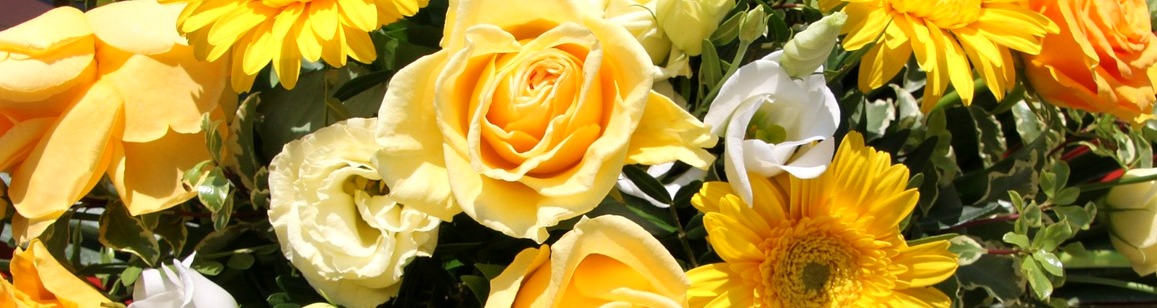
Another custom that we have is to spread out greenery in our homes and synagogue on Shavu’os. The Levush says the reason for this is also so that we remember how things were at the time the Torah was given. We know that Har Sinai was full of greenery, as Hashem had to give a warning to the nation of Israel that “also your sheep and cattle should not graze by this mountain (Sh’mos 34:3). In order to remember that time, we too have greenery, so we remember how things were at the time we received the Torah.
It is mentioned by the Magen Avraham that there used to be a custom as well to bring trees into the synagogue on Shavu’os, as Shavu’os is the day the fruit trees are judged as to how they will produce for the rest of the year. If trees are there before us as we pray, we will be reminded to pray for the fruit trees as well. However, the custom was abandoned when other religions brought trees into their houses of worship on their holidays.
The Megilla of Rus (Ruth) is read in Shavu’os. Sefer Ta’amei Haminhagim writes that we read this Megilla on Shavu’os because of the connection between Ruth and King David. The Megilla of Ruth was written by the prophet Sh’muel so that we would know the story of David’s ancestors, and that David came from this righteous woman. In the Tosafos on the tractate of Chagiga (17a), we are told that David died on Shavu’os. As we have a tradition that Hashem makes “complete” the lives of the righteous, it must be that David was born on Shavu’os as well. It is therefore appropriate to read the story of David’s ancestors as an honor to him, on the day of his birth.
The Magen Avraham (490:8) tells us that there is another connection between Ruth and Shavu’os. Just as the process leading to our receiving the Torah was filled with pain and trying times, so too the path that Ruth took to receiving the Torah was filled with the same.
Check out all of the posts on the Shavuos! Head over to http://www.torah.org/learning/yomtov to find the newly redesigned YomTov Home Page, and click on the holiday you are interested in to find all of the archived posts on that topic.
For questions, comments, and topic requests, please write to Rabbi Yehudah Prero.