

Tu BiShvat
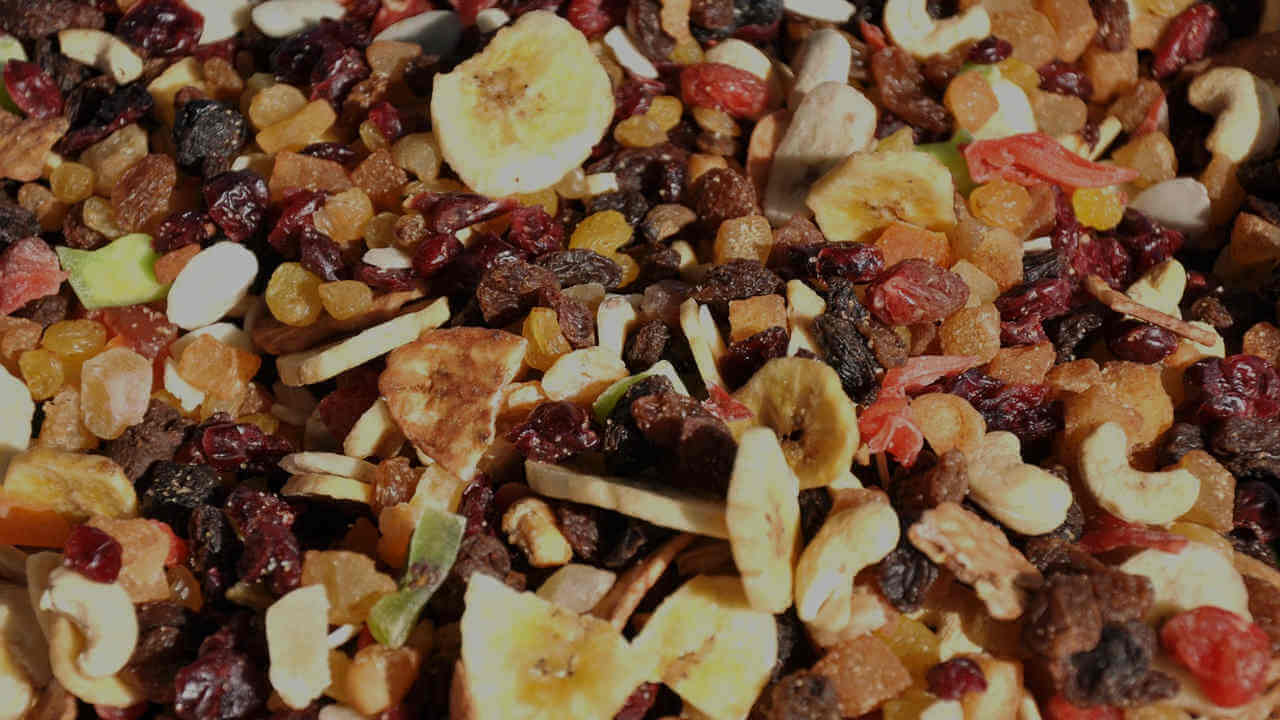
by Rabbi Yaakov Feldman Ever wonder what baseball players, for example, do off-season, or what actors do off-stage? It’s only natural to wonder what kind of secret lives such individuals lead. What our people have been curious about this time of the year for millennia is what fruit-trees are doing now. Because we’re coming upon Tu B’shvat, the Rosh Hashanna (“New Year”) of trees. And our old friends are fast approaching the spot-light again. So let’s sneak a peek at the inner life of fruit-trees. We ourselves (as well as the trees) have suffered through the very thickest, coldest, darkest part of winter up to now, and are anticipating its end. The night is at long last inching in a bit later, day by day, and we’re actually waking up to light by now. So we’re somehow a bit more settled in our beings and more optimistic. As if our blood were churning within anew, and we were beginning to actually feel our arms and legs again. In a sense, the same is going on within the trees. The “blood”, i.e., resin and sap, is beginning to rise deep in the heart of trees by now, and they too are beginning to sense their limbs about now. And all that is passing along on a very deep and phenomenal level to the frozen-over fruit buds as well. So by the time Tu B’Shvat actually rolls around, winter begins to think of succumbing to the spring. But not quite yet. We’re taught that the seasons of the year correspond to the “seasons” of the day. That fall is analogous to evening-time, the dead of winter to mid-night, spring to dawn, and summer to mid-day. That being so, it follows that Tu B’Shvat is about 3 or 4 AM, since it’s smack-dab in the middle of the winter season]. What’s most significant about 3 or 4 AM is that it’s just not clear whether it’s extremely early in the morning, or extremely late at night. And in fact that kind of touches on a distinction our sages make about Tu B’Shvat. They reveal that Tu B’Shvat is the very point at which the tree stops being nourished by the waters of the previous year, and begin to be nourished by the new year’s waters. And since we clearly can’t call the moment when that process starts, it’s sort of like 3 or 4 AM for trees, as far as we’re concerned. We’ll get back to that. Now, a custom has arisen of having a special meal comprised of fruits of the tree on Tu B’Shvat, and to eat them in order of importance (based on their appropriate blessings). The custom is especially prevalent in the Chassidic community, where it’s been tied in with the Esrog (the citron fruit we take hold of on Succot). Some Chassidim candy or pickle the actual Esrog they’d used the previous Succot, and eat it on Tu B’Shvat. While others use the occasion to concentrate their prayers on qualifying for an exceptional Esrog on the following Succot. So all in all we could perhaps understand Tu B’Shvat to be a no-man’s-land of sorts, somewhere in the dark of night, somewhere between winter and spring, somewhere between last year’s water supply and next yera’s, somewhere between last year’s Succot and next year’s. But there’s got to be more. There is, and it has to do with the tree’s *fruits*, rather than with the tree itself. For since the production of fruit is the very raison d’etre of fruit-trees, fruit represents aim and purpose. And it stands for our own aim and purpose, since human beings are likened to trees. But what is our aim in life? To deepen in our hearts and spirits our whole lives long. So the point seems to be that what we’re to do on Tu B’Shvat is to realize that we’re all indeed sitting in the very matrix point between our entire past and our entire future. We’re all dwelling in an existential 3 or 4 AM at this moment. And we must determine now what our future will be. Will our dreams of growth and spiritual excellence “bear fruit”, or won’t they? Was last year’s Esrog better than next year’s will be, or vice versa? It seems the best way, then, to insure that we grow and bear fruit ourselves our whole lives long would be to sense the G-d-given resins flowing through our body; to then stretch the limbs of our being outward; and, finally, to envision last year’s Esrog– last year’s spiritual fruit– as a rung to use in order to step higher yet, onto an even greater Esrog. May G-d grant us all the capacity to dream dreams of holiness and growth, and allow us the wherewithal to accomplish it in our lifetime. “A Thing or Tu ’bout Shvat”